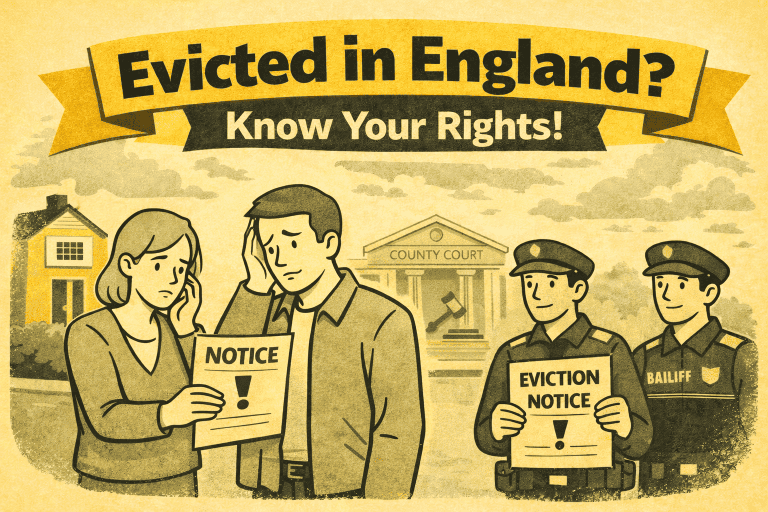
Is your Section 21 notice valid: a tenant checklist

Super Speedy Summary:
This guide explains how you, as a tenant in England, can check if a Section 21 eviction notice is valid, how deposit protection, safety paperwork, licensing and repairs affect validity, and how the Renters Rights Act 2025 changes things before and after 1 May 2026.
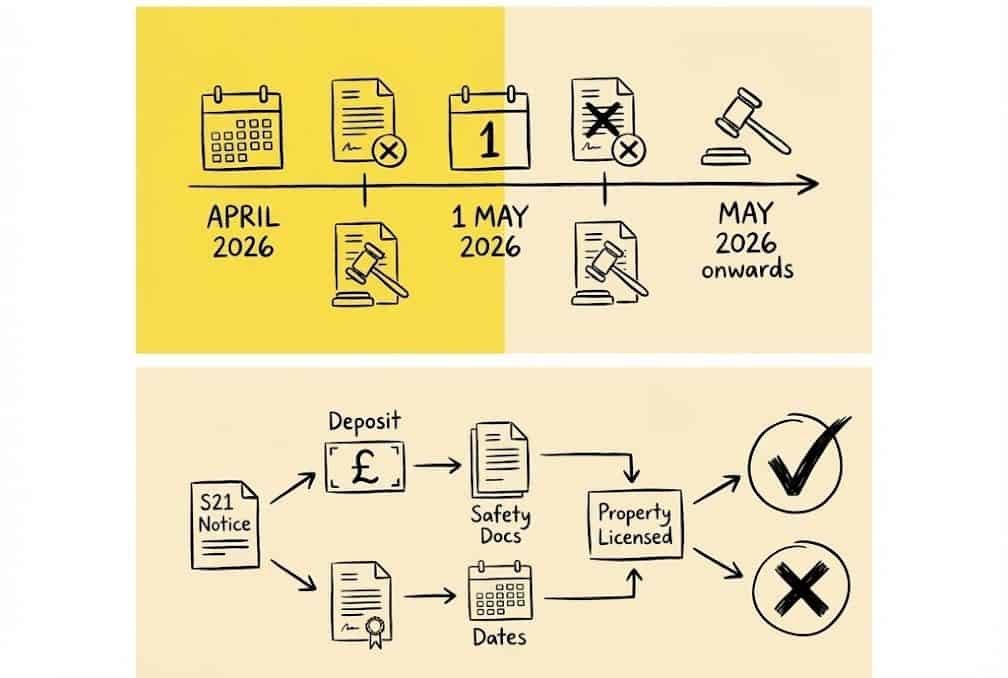
Section 21 now and after May 2026
Right now Section 21 is the main no fault eviction route for assured shorthold tenants in England. Your landlord does not have to prove you have done anything wrong, but they must follow strict legal rules for the notice to be valid.
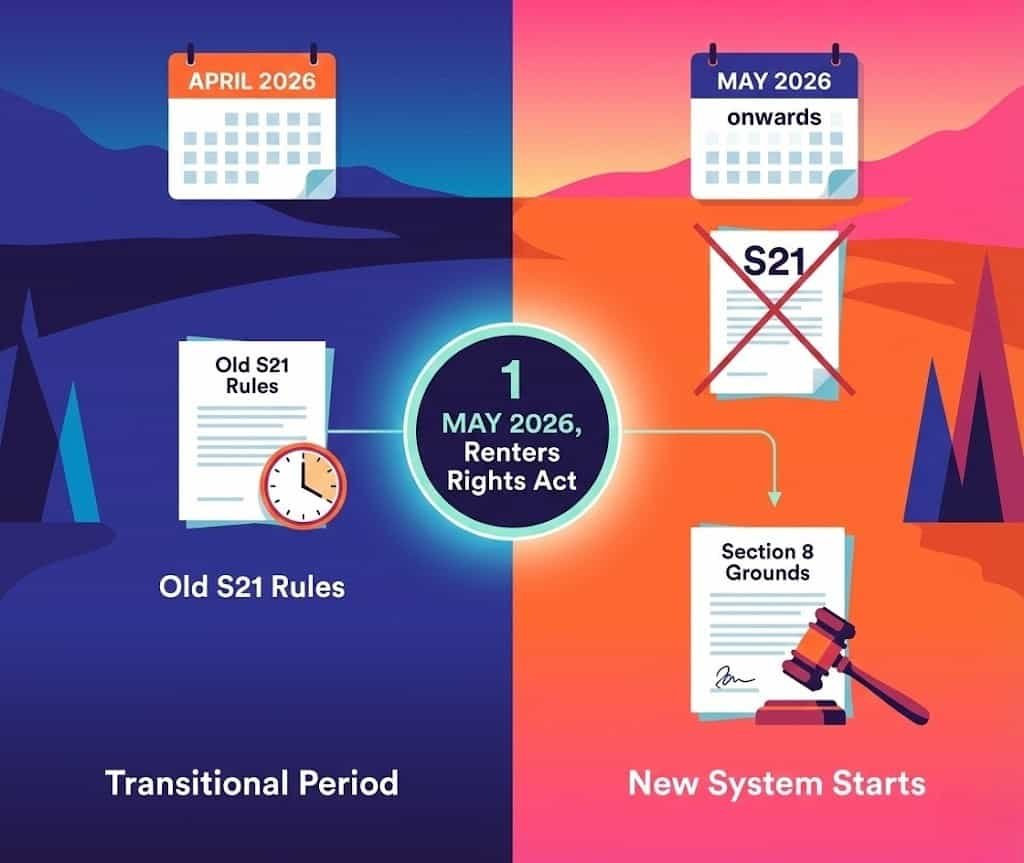
The Renters Rights Act 2025 abolishes Section 21 for private tenants from 1 May 2026. From that date new evictions must use Section 8 grounds, for example rent arrears, serious antisocial behaviour, the landlord selling or moving in, with longer notice periods and extra safeguards.
If you are holding a Section 21 notice, you should first look at the date on it.
If the notice is dated before 1 May 2026, the current Section 21 rules apply, plus transitional rules under the new Act.
If a landlord serves a new notice dated on or after 1 May 2026 and calls it Section 21, that procedure should no longer be available for most private tenants. In that situation you should treat the notice with caution and get urgent housing advice.
Step 1: can your landlord use Section 21 for your tenancy
Section 21 is only for assured shorthold tenancies. Many private renters who do not live with their landlord have this type of tenancy.
Section 21 does not normally apply if you are a lodger living with your landlord, if you have a licence rather than a tenancy, or if you are a secure or assured tenant of a council or housing association.
Look at your written agreement if you have one. It often says “assured shorthold tenancy”. If you are not sure what you have, do not assume your landlord is right just because they wrote Section 21 on the form. Keep all your papers and ask an advice service or solicitor to confirm your tenancy type.
Step 2: check the notice itself
To be valid a Section 21 notice must be in writing, must clearly refer to Section 21 of the Housing Act 1988, and must correctly name you and the property.
Most tenants in England should be given the prescribed Form 6A. If the form looks very home made or is obviously not Form 6A, that is a warning sign and you should get it checked.
Look carefully at the dates. The notice must:
- Give you at least two months notice
- Not be served in the first four months of your original tenancy
- Not expire before the end of a fixed term in your agreement
There is also a time limit on how long the notice can be used. In most cases your landlord has six months from the date of the notice to start a court claim. If they miss that, they usually need to serve a fresh notice.
If the notice has obvious mistakes in your name, address or dates, keep a copy and show it to an adviser. Some small errors can be overlooked by a judge, but serious errors can make the notice invalid.
Step 3: deposit protection and key documents
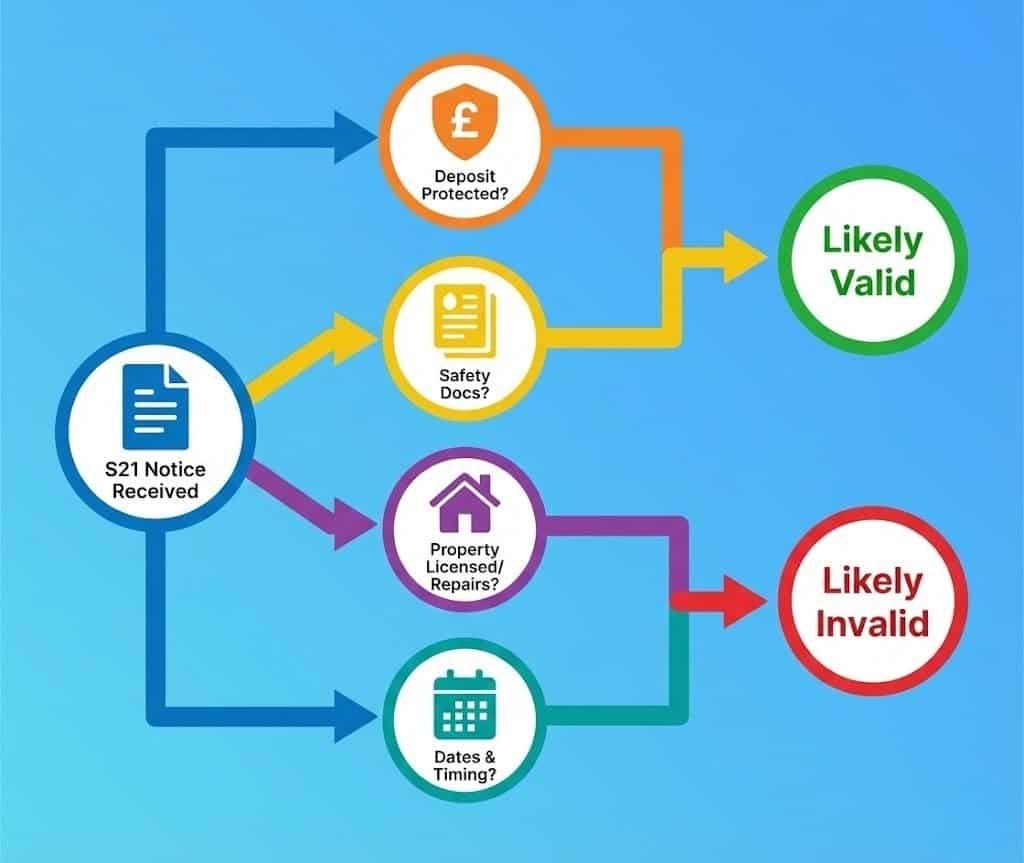
A very common reason a Section 21 notice is not valid is because of problems with the deposit or paperwork.
If you paid a tenancy deposit, your landlord must have protected it in a government backed scheme and must have given you prescribed information about where it is protected. If they did not do this in time, they usually cannot use a Section 21 notice unless they have repaid the full deposit to you first.
For most tenancies that started or were renewed on or after October 2015 your landlord also needs to have given you, by the time they serve the notice, a current gas safety certificate if there is gas, a valid energy performance certificate, and the latest version of the government How to rent guide.
If you never received some of these documents, or only received them after the notice, this can affect whether the notice is valid. Collect what you have and make a note of when you received each document.

Step 4: licensing, repairs and retaliatory eviction
Some homes must be licensed by the local council. This is common for houses in multiple occupation and in some areas where the council has brought in selective licensing.
If your home should be licensed but is not, or there is no licence application in progress, your landlord is normally blocked from using Section 21 while that problem continues. You can check with the local council if you suspect your landlord should have a licence.
Repairs and poor conditions can also affect Section 21. If you complained in writing to your landlord about serious disrepair, and the council then served certain enforcement notices, your landlord is usually prevented from using Section 21 for a period of time. This is sometimes called protection from retaliatory eviction.
Keep copies of every email and letter about repairs, both to your landlord and to the council. These can be vital if you later need to argue that the notice is not valid.
Step 5: timing, old Section 21 notices and the Renters Rights Act
Even before the new Act, a Section 21 notice does not last for ever. Your landlord normally has six months to start a possession claim. After that they should serve a new notice if they still want to rely on Section 21.
The Renters Rights Act 2025 brings in extra transitional rules around 1 May 2026. The broad effect is that old Section 21 notices will only be usable for a limited time after that date. If your landlord tries to use a very old Section 21 notice once the new regime has started, you may be able to argue that it has expired and that they must use the new Section 8 system instead.
Because the exact rule depends on dates and on the detail of the Act and its commencement regulations, you should always get specific legal advice if your notice overlaps with May 2026.
What to do if you think your Section 21 notice is not valid
A Section 21 notice does not mean you have to leave on the date in the notice. Your landlord still has to go to the county court, obtain a possession order, and then, if you do not leave, arrange an eviction by court bailiffs or enforcement agents. They are not allowed simply to change the locks or remove your belongings.
If you think your Section 21 notice is not valid, gather everything in one place, your tenancy agreement, the notice, deposit information, safety certificates, emails about repairs, and any letters from the council. Then contact an independent advice service such as Shelter, Citizens Advice, a law centre or a housing solicitor. If you receive court papers, never ignore them, even if you believe the notice is defective. You will usually need to tell the court, in writing and sometimes at a hearing, exactly why you say the Section 21 notice is not valid.
Disclaimer: This article is general information for private tenants in England. It is not legal advice. Always get personalised advice about your own tenancy, your eviction notice and any court claim.