Improvement notice process: How the council forces landlord repairs
| Tenant Hive Super Speedy Summary |
|---|
| An improvement notice is a legal order issued by your local council that forces your landlord to fix specific hazards in your home. This process usually begins after an Environmental Health inspection finds that your property does not meet the legal safety baseline. Once a notice is served, your landlord must complete the work within a set timeframe or face heavy fines. |
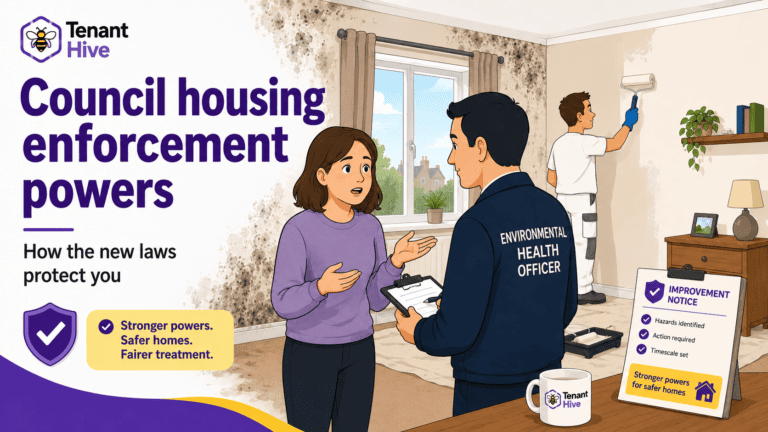
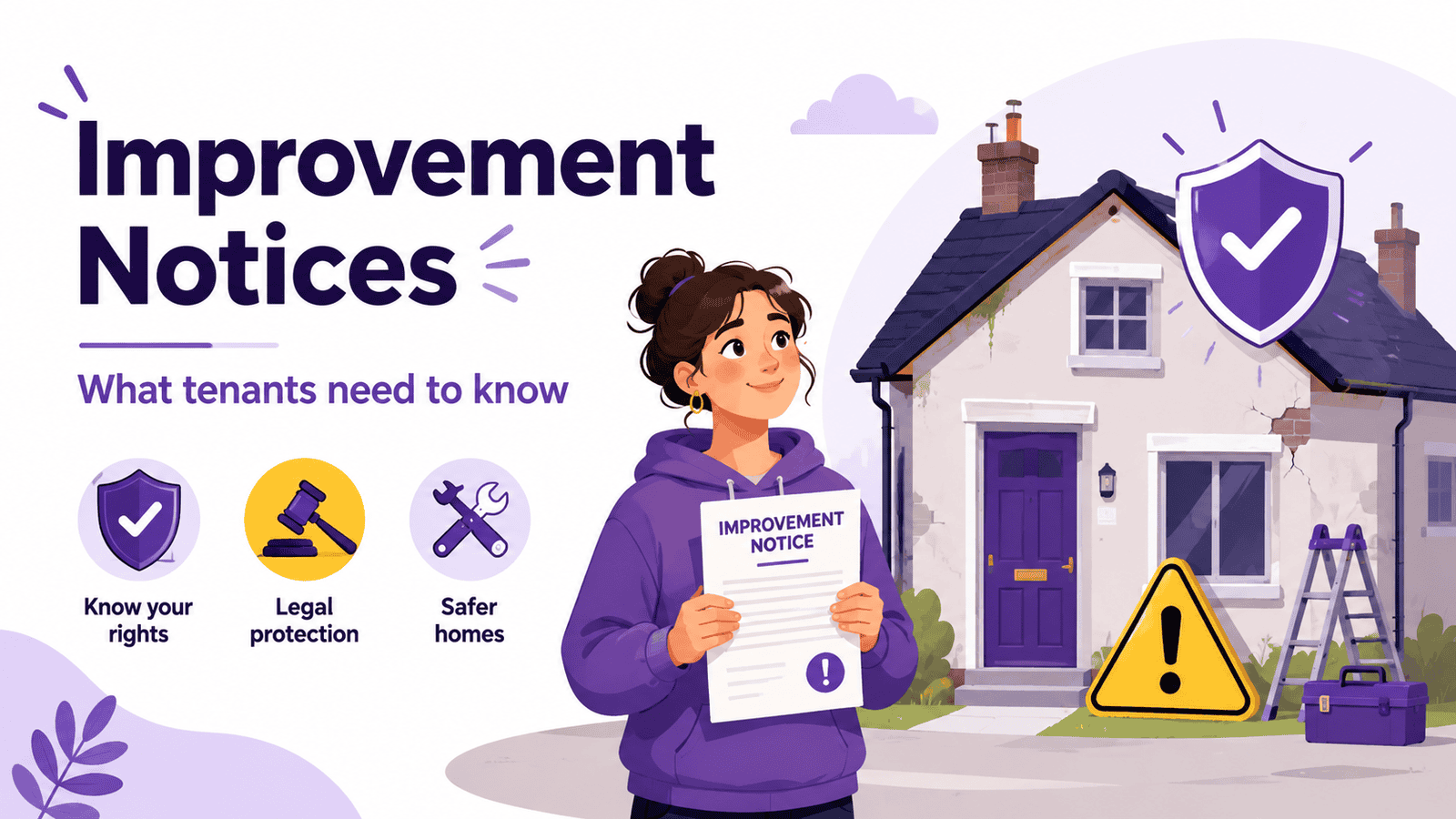
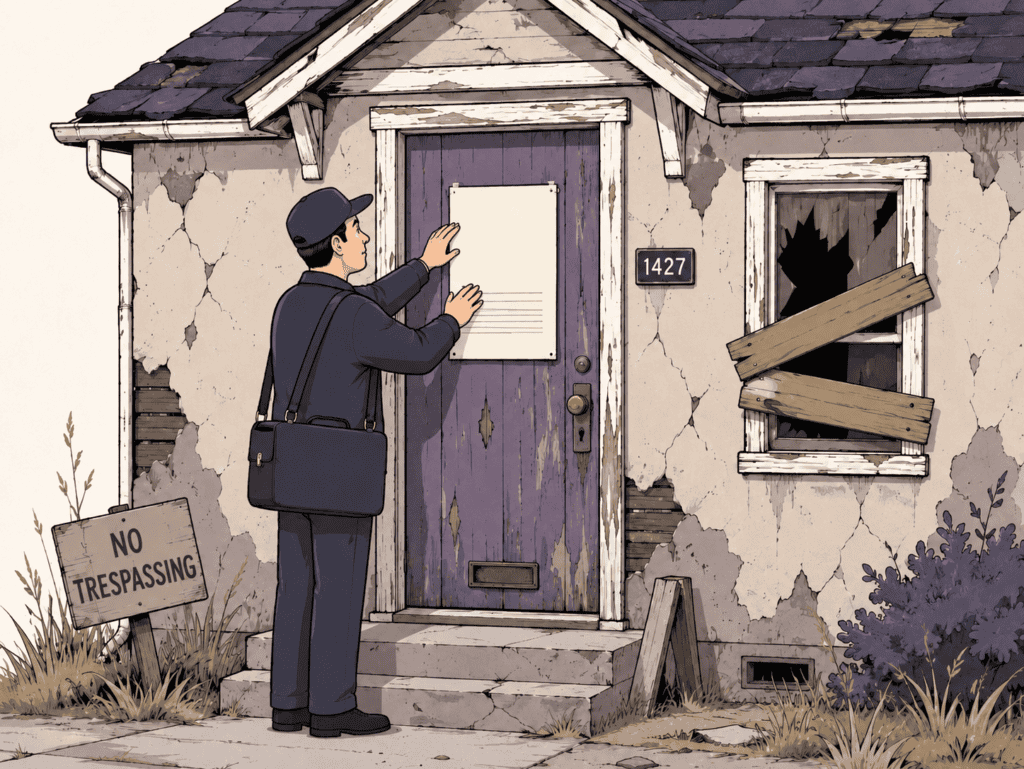
If your home is unsafe and your landlord refuses to act, the local council has the power to step in. Through the improvement notice process, the council moves from giving advice to issuing legal orders that a landlord cannot ignore without facing serious consequences.
The Renters Rights Act 2025 has significantly strengthened this area of law. It provides more robust protections for tenants who request inspections and increases the financial penalties for landlords who fail to comply with safety standards.
Glossary
- Environmental Health: The council department responsible for inspecting housing conditions and enforcing safety laws.
- HHSRS (Housing Health and Safety Rating System): The risk assessment tool councils use to identify hazards like damp, mould, or fire risks.
- Category 1 Hazard: A serious hazard that poses a significant risk to your health or safety; the council has a legal duty to act on these.
- Category 2 Hazard: A less serious hazard where the council has the power, but not always the duty, to take action.
- Improvement Notice: A legal order specifying what repairs are needed and by when they must be finished.
- Civil Penalties: Fines of up to £40,000 issued by the council for breaking housing laws.
What the Renters Rights Act 2025 says
The Renters Rights Act 2025 changes the power dynamic between tenants and landlords regarding property standards. For the first time, it extends the Decent Homes Standard to the private rented sector, giving councils a clearer benchmark for what a safe home looks like.
Crucially, the Act increases the maximum civil penalties that a local council can impose on a landlord for failing to comply with an improvement notice from £30,000 to £40,000. It also strengthens the investigatory powers of council officers, allowing them to demand documents and enter premises more effectively to ensure repairs are done.
What the Roadmap means for timing
According to the Renters Rights Act Roadmap, the rollout of these enforcement powers is phased to allow councils to prepare.
- Transitional period (Now until May 2026): Councils are currently receiving £18.2 million in funding to build enforcement capacity. You can still request inspections under existing Housing Act 2004 rules.
- Post commencement (From 1 May 2026): The full weight of the Renters Rights Act 2025 becomes active. This includes the new £40,000 fine limit and the application of the Decent Homes Standard to your tenancy.
- Investigatory Powers (27 December 2025): New powers for councils to inspect properties and demand information come into effect earlier than the main tenancy reforms.
What this means for you as a tenant, practical steps
If you are living with disrepair, follow this step-by-step process to trigger council action.
1, Report to the landlord in writing
Before the council will usually intervene, you must show that you have given the landlord a chance to fix the problem. Keep copies of all emails or texts. This is vital for retaliatory eviction protection, as the council can only protect you if you have followed the correct reporting route.
2, Contact Environmental Health
If the landlord ignores you or the repairs are inadequate, ask your local council for an HHSRS inspection. Tell them if there is a risk to health, especially if you have children or a medical condition.
3, The HHSRS inspection
An officer will visit to look for HHSRS hazards. They look for 29 specific risks, including damp and mould, excess cold, and electrical safety. If they find a Category 1 hazard, the improvement notice process usually becomes mandatory.
4, Serving the improvement notice
The council serves the notice on the landlord. It must state:
- What the hazard is.
- What work must be done to fix it.
- The date the work must start (at least 28 days after the notice is served).
- The date the work must be finished.
Common problems, and how to deal with them
The landlord tries to evict you
A major fear for tenants is “retaliatory eviction.” The Renters Rights Act 2025 effectively ends this by abolishing Section 21 “no-fault” evictions. Under the new law, if a landlord wants to evict you after you complain about disrepair, they must use a Section 8 notice and prove a specific ground, like rent arrears or wanting to sell.
The landlord ignores the notice
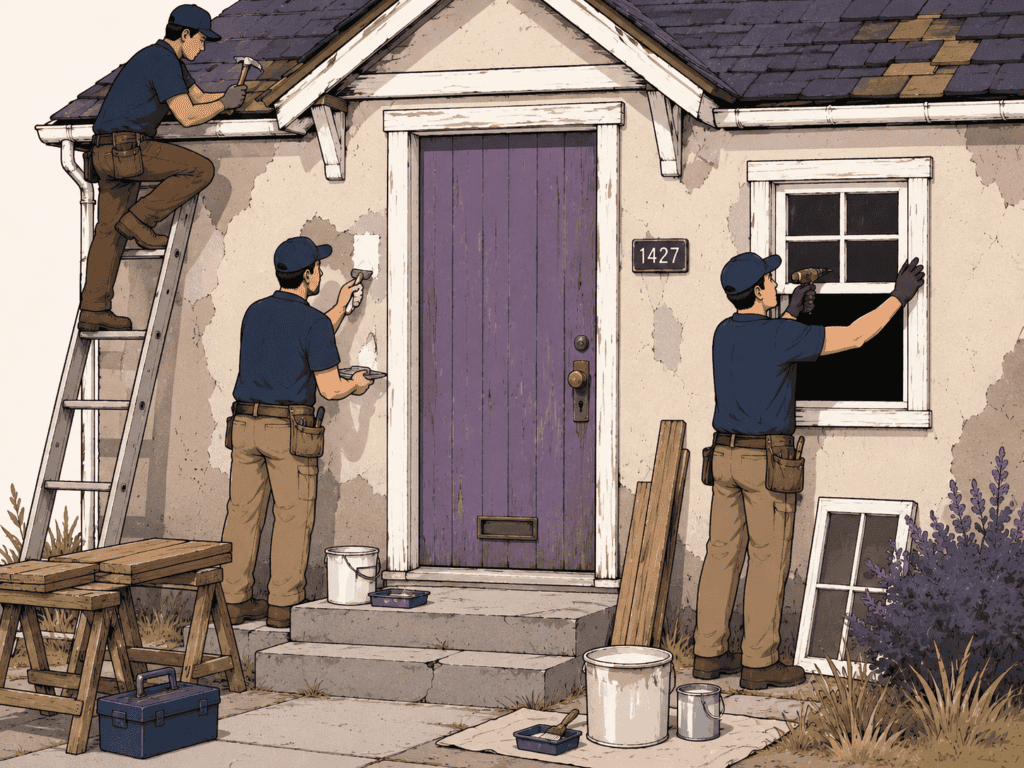
If the deadline passes and the work isn’t done, the council can take emergency remedial action, meaning they do the work themselves and bill the landlord. They can also issue a civil penalty of up to £40,000 or prosecute the landlord in court.
The council is slow to act
If the council refuses to inspect, you can complain to the Private Rented Sector Ombudsman (once active in late 2026) or use the council’s internal formal complaint procedure.
Evidence to keep, and who to contact
To make the improvement notice process work for you, you need an evidence bundle:
- Photos and videos: Clear, dated images of the disrepair, such as mould growth or broken boilers.
- Written records: A log of every time you asked for repairs and the landlord’s response.
- Medical evidence: A GP letter if the property condition is making you ill.
- The notice: Ask the council for a copy of the improvement notice once it is served.
Who to contact:
- Local Council Housing Team: For the initial inspection.
- Citizens Advice: For help understanding if your notice protects you from eviction.
- Shelter: For emergency advice if the disrepair makes your home uninhabitable.
FAQ
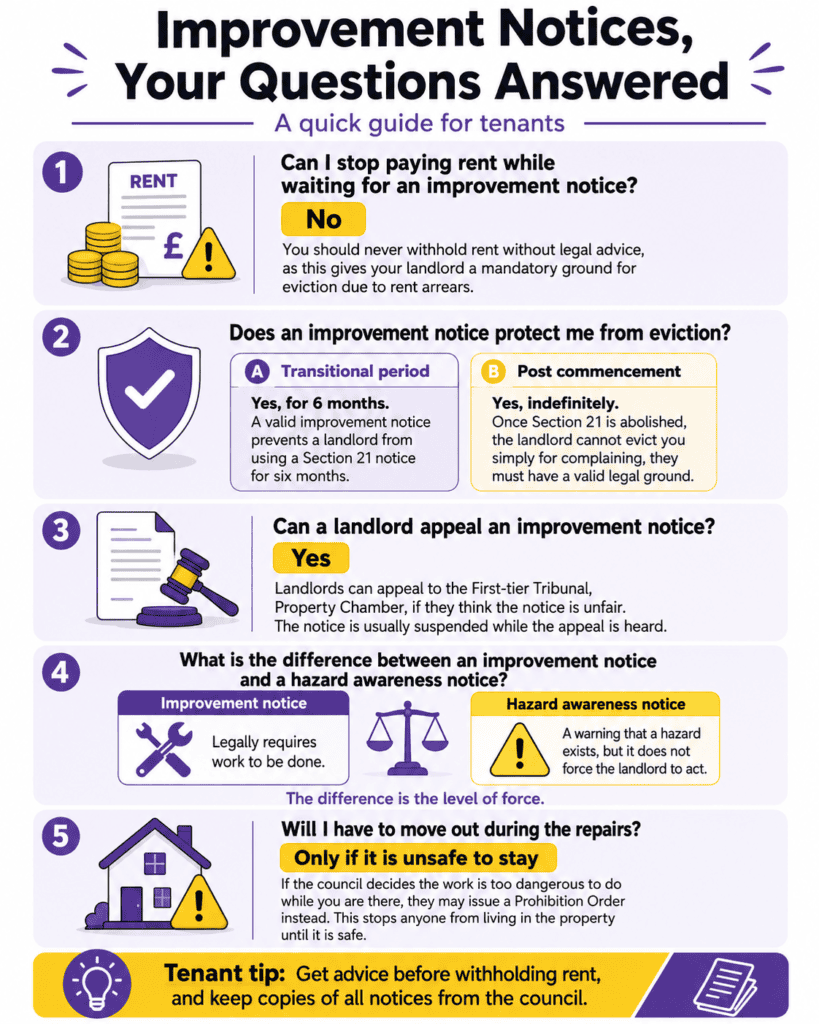
Can I stop paying rent while waiting for an improvement notice? No. You should never withhold rent without legal advice, as this gives your landlord a mandatory ground for eviction due to rent arrears.
Does an improvement notice protect me from eviction? Transitional period: Yes, for 6 months. Currently, a valid improvement notice prevents a landlord from using a Section 21 notice for six months. Post commencement: Yes, indefinitely. Once Section 21 is abolished, the landlord cannot evict you simply for complaining; they must have a valid legal ground.
Can a landlord appeal an improvement notice? Yes. Landlords can appeal to the First tier Tribunal Property Chamber if they think the notice is unfair. The notice is usually suspended while the appeal is heard.
What is the difference between an improvement notice and a hazard awareness notice? The level of force. An improvement notice legally requires work to be done. A hazard awareness notice is just a warning that a hazard exists and doesn’t force the landlord to act.
Will I have to move out during the repairs? Only if it is unsafe to stay. If the council decides the work is too dangerous to do while you are there, they may issue a Prohibition Order instead, which stops anyone from living in the property until it is safe.
Disclaimer: This article is general information for England only and is not legal advice. Tenant laws are changing rapidly under the Renters Rights Act 2025; always seek professional advice from a qualified housing solicitor or Shelter regarding your specific tenancy.