Can My Landlord Increase Rent? (UK 2025 Guide)
Short Summary of Key Facts
Key takeaways
Increasing Rent is allowed
Landlords can increase rent, however fixed-term tenancies are protected unless a rent review clause exists.
Correct procedure must be followed
Section 13 notice required with the notice depending on tenancy type.
Challenge unfair Rent Increases
Challenge unfair increases at First-tier Tribunal for free.
Rapid Response
Can my landlord increase rent? Yes, landlords in England can increase rent, but strict legal rules control when and how a rent can be increased. For periodic tenancies, landlords must provide proper notice using a Section 13 form. For fixed-term tenancies, rent can only increase if the tenancy agreement includes a rent review clause or both parties agree. Tenants have the right to challenge unfair increases through the First-tier Tribunal.
When Can My Landlord Increase Rent?
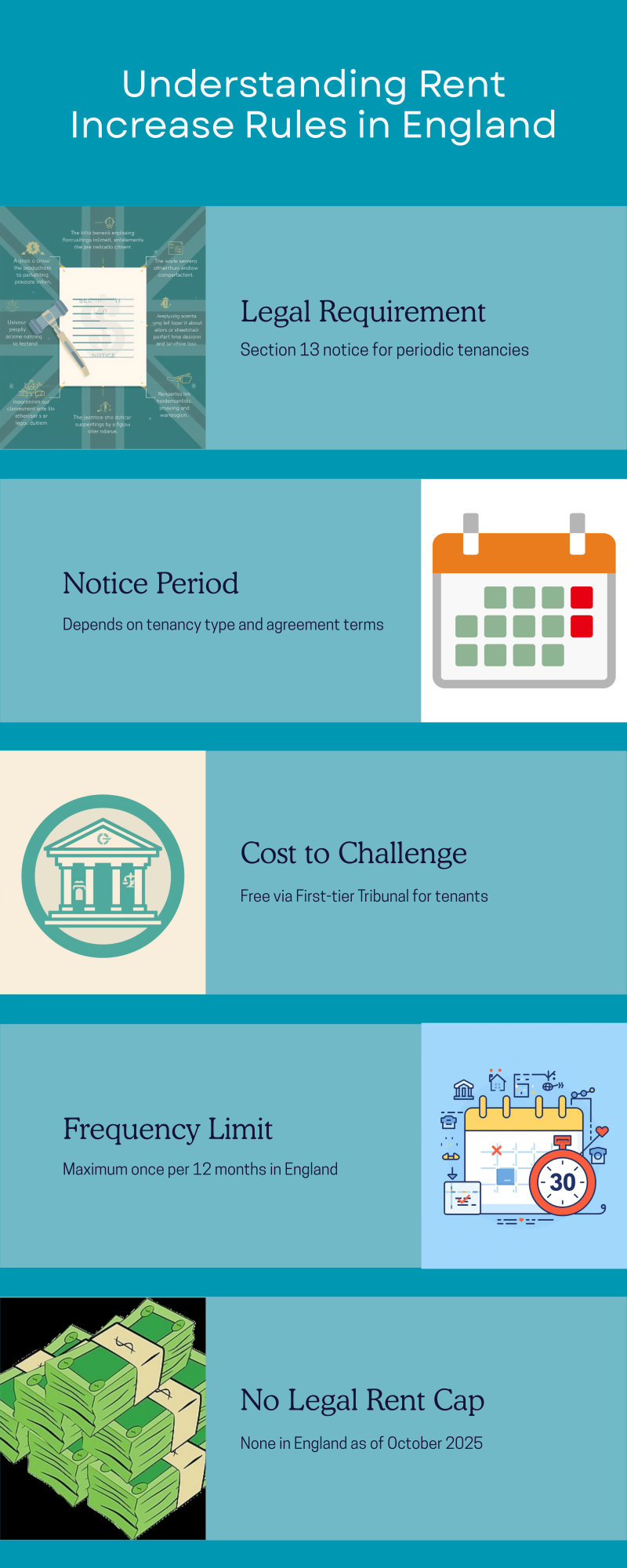
The timing of rent increases depends entirely on your tenancy type. For assured shorthold tenancies (ASTs), which represent the majority of private rentals in the UK, landlords must follow specific procedures – more about this below. If you have a periodic tenancy (rolling month-to-month or week-to-week), your landlord can propose a rent increase once every 12 months using a formal Section 13 notice.
Can my landlord increase my rent in a fixed term tenancy?
Rent Increases in Fixed Term Tenancies
Firstly, what is a fixed term tenancy you may be wondering? Well a fixed term tenancy is the type of tenancy most people enter into when they first rent a property. It is usually for 12 months, but some agree a break clause in month 6 which allows for the tenancy to terminate earlier than 12 months.
If you have a fixed term tenancy, your landlord cannot unilaterally increase rent during the fixed term unless your tenancy agreement explicitly contains a rent review clause specifying when and how rent can rise. Without such a clause, your rent remains fixed at the agreed amount until the fixed term ends – which is usually 12 months.
How do I know what type of Tenancy I have?
You should check your tenancy agreement. Most tenancy agreements are fixed for 12 months. However, once you have stayed 12 months, the tenancy then automatically turns into a ‘periodic’ tenancy which essentially means it carries on until either your landlord or your, the tenant, give notice.



How Much Can Landlords Increase Rent in 2025?
Unlike some countries, England currently has no legal cap limiting rent increase amounts for private tenancies. Landlords can theoretically propose any rent amount they believe reflects current market rates. However, the increase must be “fair and realistic” according to tribunal standards.
The lack of rent control means increases vary dramatically by region in England. In high-demand areas like London and the South-East, rent increases of 5-10% annually have become common. In less competitive markets, increases may be smaller or even non-existent.
What impact will the Renters Rights Bill have on Increasing Rent?
The Renters Rights Bill, currently progressing through Parliament, may introduce new protections against excessive rent increases or at least change the way Rent is increased to provide more protection for the Tenant. It is not law yet, and we therefore do not know exactly what the final law will be, but hopefully we should be more clear on the details later this year.
You can read more about the Renters Rights Bill and how it will likely affect the landlord’s ability to increase Rent here.
What Is a Section 13 Notice?
A Section 13 notice is the official legal form landlords must use to propose rent increases for statutory periodic tenancies and contractual periodic tenancies without rent review clauses. This document must include the proposed new rent amount, the date it will take effect, and information about your right to challenge the increase at tribunal.
1. Correct prescribed form – Landlords must use the government-issued Section 13 form..
2. Adequate notice period – this depends on tenancy type but cannot be issued in a fixed term tenancy unless it is stated clearly in the tenancy agreement
3. Proper service – Delivered in writing to tenant
4. Accurate information – New rent amount and effective date clearly stated
5. Frequency compliance – Cannot be served more than once per year
The effective date for the new rent must allow sufficient notice period – this depends on the type of tenancy agreement you have. If your landlord fails to use the correct form or provide adequate notice, the rent increase is potentially invalid and you should seek legal advice. It is a good idea to keep all rent increase notices as evidence should disputes arise.
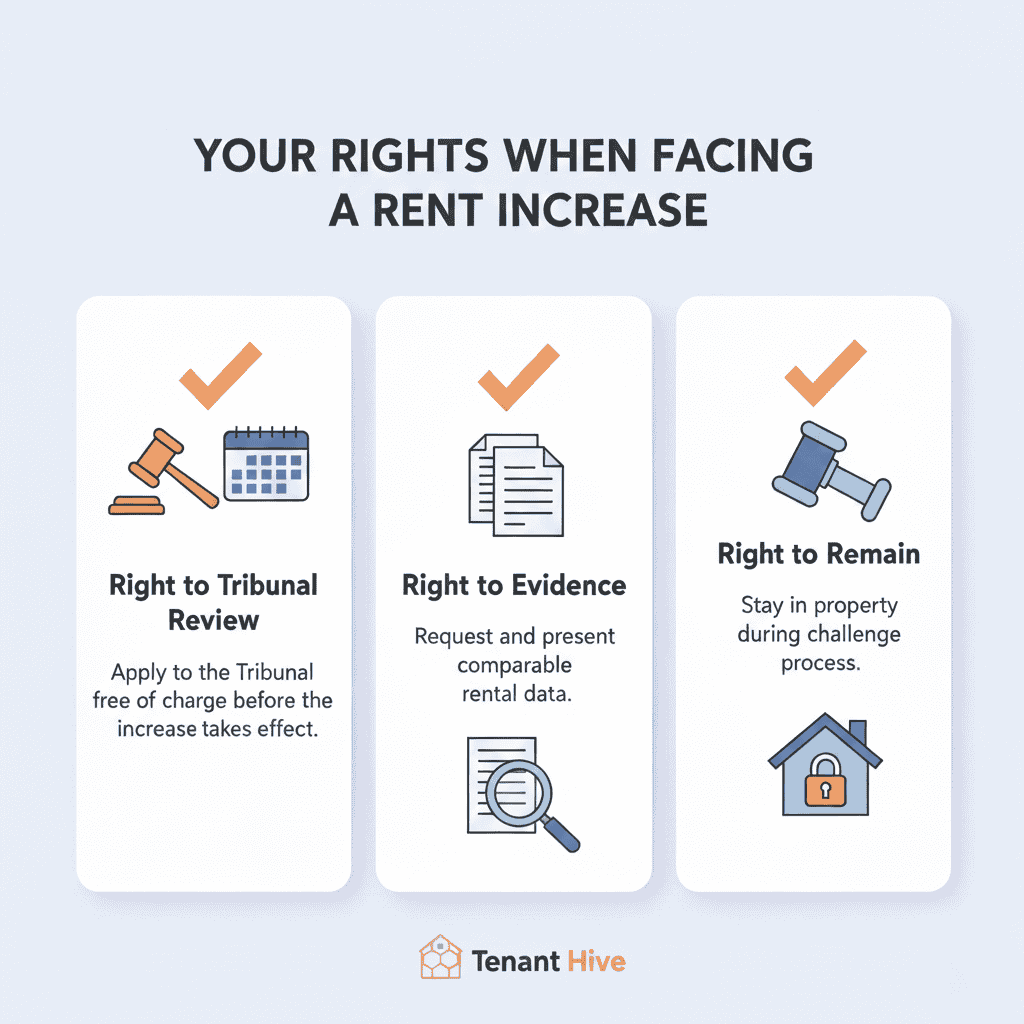
The tribunal considers factors including property size, condition, location, and local market rents. The tribunal can decide that the proposed rent is too high and should be lower or remain the same. Their decision is binding on both parties. However, if you lose, you’ll owe the increased rent retrospectively from the date specified in the Section 13 notice.
What If I Have a Fixed-Term Tenancy?
During a fixed-term tenancy, your rent can only increase in two ways: through a rent review clause in your tenancy agreement, or with your explicit written agreement. Rent review clauses must clearly state when and how rent will increase.
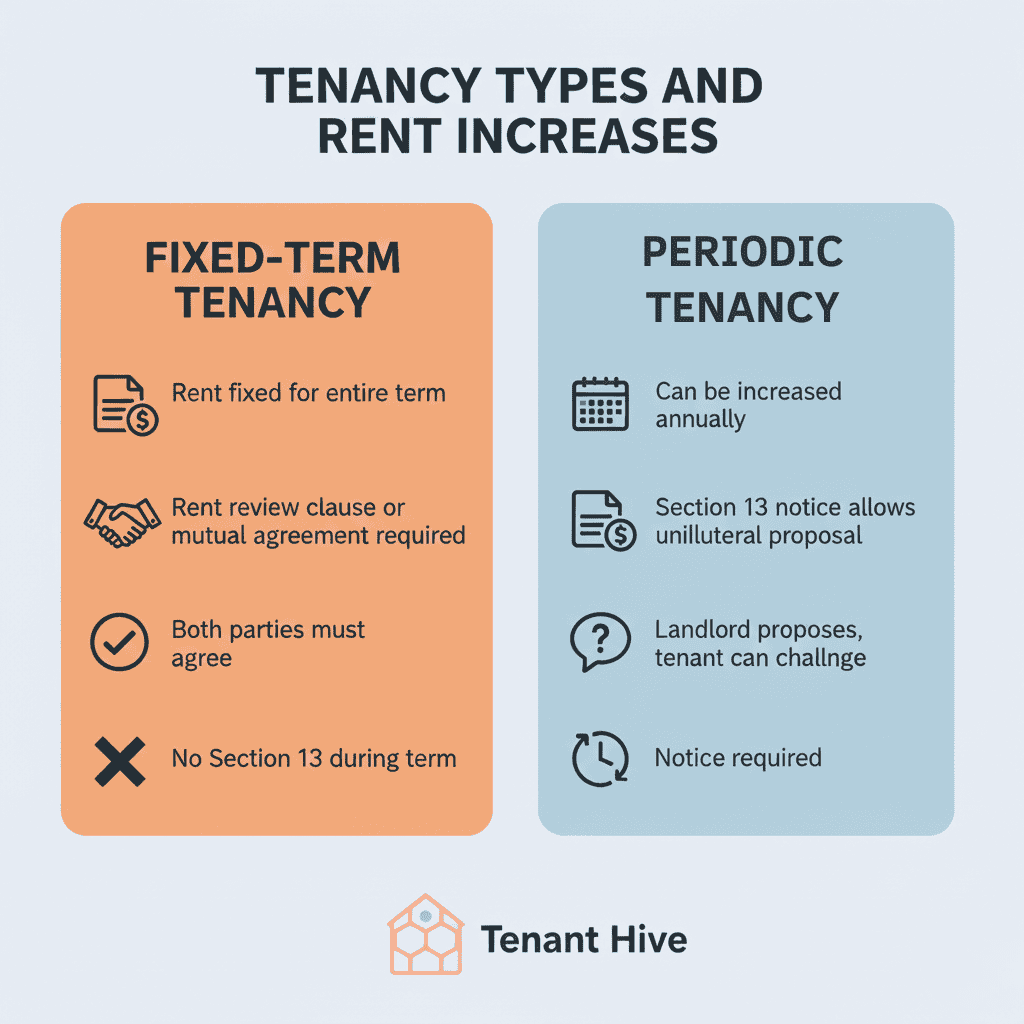
Without a rent review clause, your landlord cannot force a rent increase mid-way through the tenancy agreement. If they request one, you’re under no obligation to agree. However, refusing may mean your landlord chooses not to renew your tenancy when the fixed term expires, so it is worthwhile to have a conversation and keep a constructive relationship with your landlord.
Can I negotiate a Rent Increase with My landlord?
Yes, negotiation often succeeds before formal tribunal proceedings. If you receive a rent increase notice but cannot afford the proposed amount, contact your landlord promptly, explain your situation and try to come to a negotiated amount.
How should I negotiate a rent increase with my Landlord?
How should I negotiate with my landlord to agree a rent increase?
Effective negotiation strategies:
- Research market rates: Bring evidence of comparable properties at lower rents. Use website such as Rightmove or Zoopla
- Propose alternative rent increase: Suggest smaller increase or longer implementation period
- Highlight your value: Reference prompt rent payment history and property care
- Consider timing: Negotiate before notice becomes legally binding
- Get it in writing: Document any agreed modifications via email or letter. This is critical, do not rely on verbal conversations alone.
Many landlords prefer retaining good tenants at slightly lower rent rather than facing void periods, where the property is empty, whilst they try to find new tenants. Emphasise your reliability as a tenant and willingness to continue the tenancy long-term.
Pro Tip
Remember, document all negotiation attempts in writing. Even if you have had a phone-call and the Landlord assures you that your new rent amount is lower, drop the landlord an email stating something along the lines of “Further to our telephone conversation, I would like to confirm….”
What happens if I don’t pay my rent?
If your landlord serves a valid Section 13 notice and you don’t challenge it at tribunal, the new rent becomes legally due from the specified date. Continuing to pay only the old rent amount creates rent arrears, potentially leading to eviction.
⚠️ Consequences of non-payment:
- After 1 month: Rent arrears begin accumulating
- After 2 months: Landlord can serve Section 8 notice (Ground 8 – mandatory)
- After 3-4 months: Court possession proceedings likely filed
You should either pay the increased amount or challenge it formally through the tribunal rather than simply withholding payment. Rent arrears put you at serious risk of losing your home through mandatory eviction proceedings. The new Renters’ Right Act is set to improve protections for the Tenant for rent increases, you can read more about that here.
Frequently Asked Questions Tenants Ask
Q: Can my landlord increase rent during a fixed-term tenancy?
A: No, unless your tenancy agreement includes a rent review clause specifying when and how. Without one, rent stays fixed until the term ends.
Q: Is there a legal limit on how much rent can increase?
A: No legal cap exists in England for private rentals as of October 2025. Increases must be “fair and realistic” to market rates.
Q: Can I stay in my home if I challenge the increase?
A: Yes, you remain protected during tribunal proceedings. However, currently the landlord can still issue a Section 21 Notice to evict you, although this is being abolished by the Renters’ Right Act which is due to come in soon.
Q: What if my landlord didn’t use the proper Section 13 form?
A: The rent increase is potentially invalid. You should take legal advice about what you should do.
Where Can I Get More Free help?
Free resources for tenants:
- Shelter: 0808 800 4444 | england.shelter.org.uk
- Citizens Advice: 0800 144 8848 | citizensadvice.org.uk
- First-tier Tribunal: Apply online at gov.uk/appeal-housing-benefit-decision
- Government guidance: gov.uk/private-renting