Renters’ Rights Act: What Does the End of Section 21 ‘No-Fault’ Evictions Mean for Me?
In a Nutshell
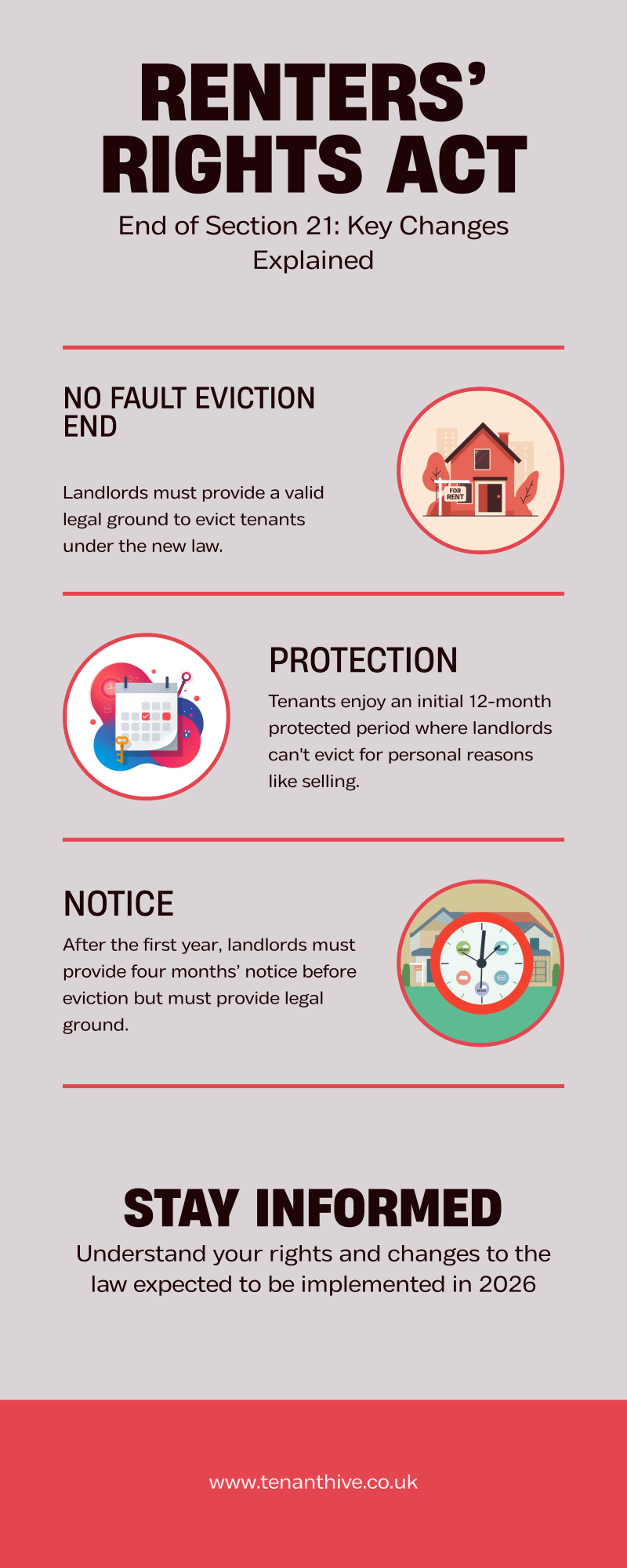
- Section 21 evictions will be abolished, meaning landlords can no longer evict you without providing a valid reason
- You’ll have 12 months’ protection at the start of any new tenancy from eviction for sale or landlord move-in
- Landlords must give you 4 months’ notice (instead of 2) when evicting to sell or move in
- All tenancies will become periodic (rolling month-to-month), giving you flexibility to leave with 2 months’ notice

What is Section 21 and why is it being abolished?
Section 21 is the current law that allows landlords to evict you from your home without giving any reason whatsoever. Under this system, your landlord only needs to provide 2 months’ notice, and after that period, the court must order your eviction—even if you’ve done nothing wrong and paid your rent on time.
When will Renters’ Right Bill Become Law?
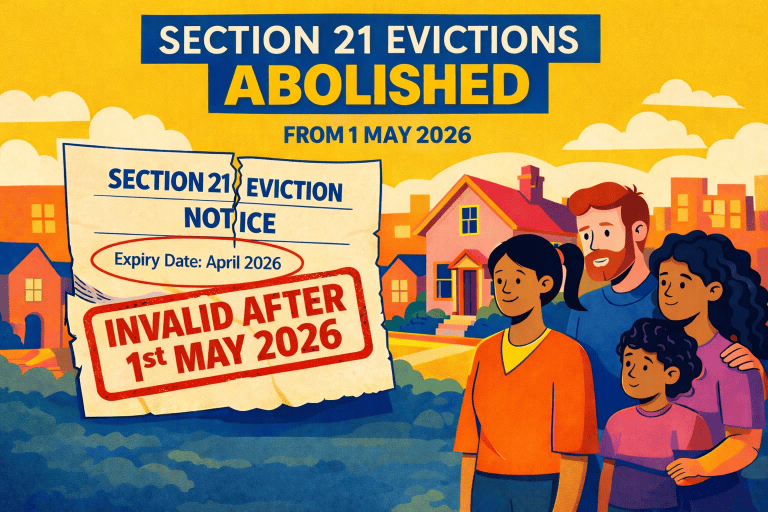
The Renters’ Rights Bill, introduced to Parliament on 11 September 2024 and due to come into effect early next year, will end Section 21 evictions completely. This means landlords will only be able to evict you in specific circumstances defined by law, such as if you’re in serious rent arrears or if they need to sell the property.
How will this protect me from unfair eviction?
Once the Bill becomes law, more than 11 million renters in England will no longer live with the constant worry of being uprooted from their home with minimal notice and no justification. This change is particularly important if you’ve been afraid to complain about poor conditions or ask for repairs, fearing your landlord might retaliate with a Section 21 eviction notice.
The new system empowers you to challenge poor practice and unfair rent increases without the fear of immediate eviction.
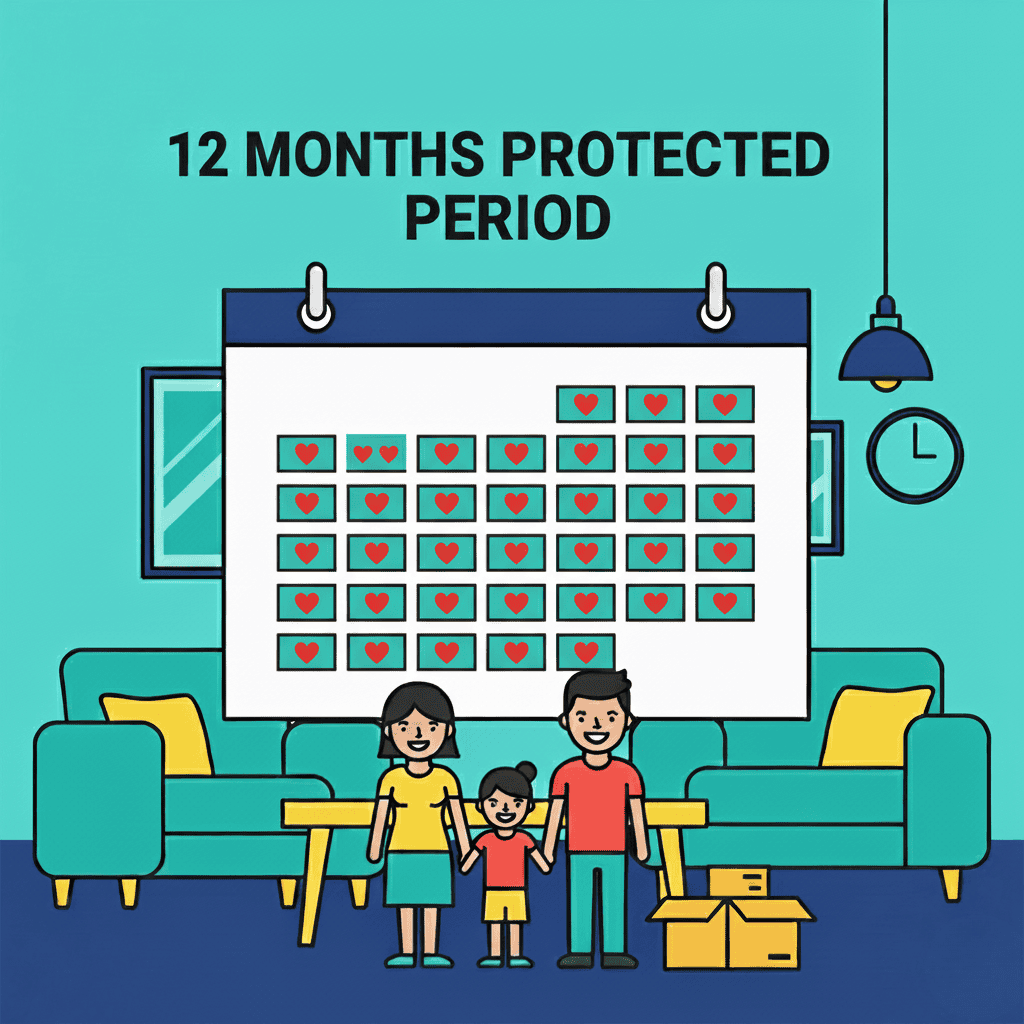
What is the new 12-month protection period?
Under the new rules, you’ll benefit from a protected period of 12 months at the beginning of any tenancy. During these first 12 months, your landlord cannot evict you using the “sale of property” or “landlord move-in” grounds. This gives you security and breathing space to settle into your home and build your life in the community.
How much notice will my landlord need to give me?
When landlords do need to evict you to sell the property or move in themselves (after the 12-month protection period), they must give you 4 months’ notice instead of the current 2 months. This extended notice period gives you significantly more time to find alternative accommodation and reduces your risk of homelessness.
For other grounds, such as serious rent arrears or anti-social behaviour, different notice periods will apply depending on the circumstances.
When will these changes take effect?
The government has not said when it will implement the Renters’ Right Bill into law yet, but it is due to have Royal Assent by the end of this year with the expectation of becoming law early in 2026. On the implementation date, all existing tenancies will automatically convert to the new system, and any new tenancies signed on or after that date will be governed by the new rules. The government has stated that it will provide sufficient notice to the sector before this takes effect.
It is important to note that the Renters’ Right Bill is not yet law yet, but it is currently awaiting something called Royal Assent, after which a date will be set for it to become law next year.
Frequently Asked Questions
Can my landlord still evict me under the new system?
Yes, but only if they have a valid legal reason (called a “ground for possession”). Your landlord must prove to a court that the ground applies, and they cannot simply evict you because they feel like it. Valid grounds include serious rent arrears, anti-social behaviour, or if they need to sell or move into the property themselves.
What if I’m already in a tenancy when the new law comes in?
Your existing tenancy will automatically convert to the new system on the implementation date. Any fixed-term tenancy will become periodic (rolling), and your landlord will no longer be able to serve a Section 21 notice.
Does this mean I can never be evicted?
No. The new system still allows landlords to evict tenants when there’s a legitimate reason. This includes situations where you’re at fault (such as rent arrears, property damage, or anti-social behaviour) or where your landlord’s circumstances genuinely change (such as needing to sell or if the landlord or a close family member needs to move in).
Official Government Sources Used:
- Guide to the Renters’ Rights Bill: https://www.gov.uk/government/publications/guide-to-the-renters-rights-bill/guide-to-the-renters-rights-bill
- Renters’ Rights Bill Main Page: https://www.gov.uk/government/collections/renters-rights-bill