
What is a section 21 eviction notice
Right now, most private renters have an assured shorthold tenancy. Your landlord can try to evict you with a section 21 eviction notice or a section 8 notice.

A section 21 eviction notice is often called a no fault eviction. The landlord does not need to prove you did anything wrong. To use section 21, the landlord must usually have:
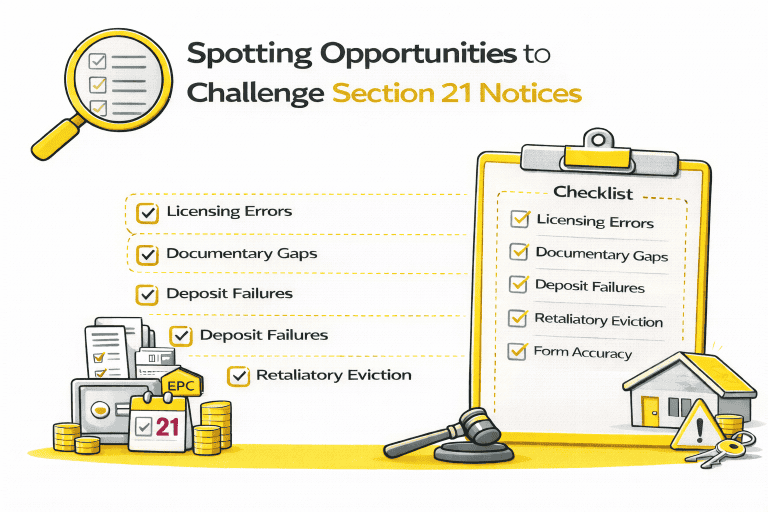
- Protected your deposit correctly and given you the prescribed information
- Given you safety documents such as gas and energy certificates
- Given you the current How to Rent guide
- Complied with any licence rules for the property
A section 21 notice must:
- Be in writing on the correct form
- Give at least two months notice
- Be used in a court claim within a limited time
You do not have to leave just because you receive a section 21 eviction notice. If you stay past the notice date, the landlord must go to court and get a possession order before anyone can legally evict you.
A section 8 notice is different. It is used when the landlord says you have broken the tenancy agreement, for example serious rent arrears or antisocial behaviour. The notice must list legal grounds, and the landlord must prove those grounds in court.
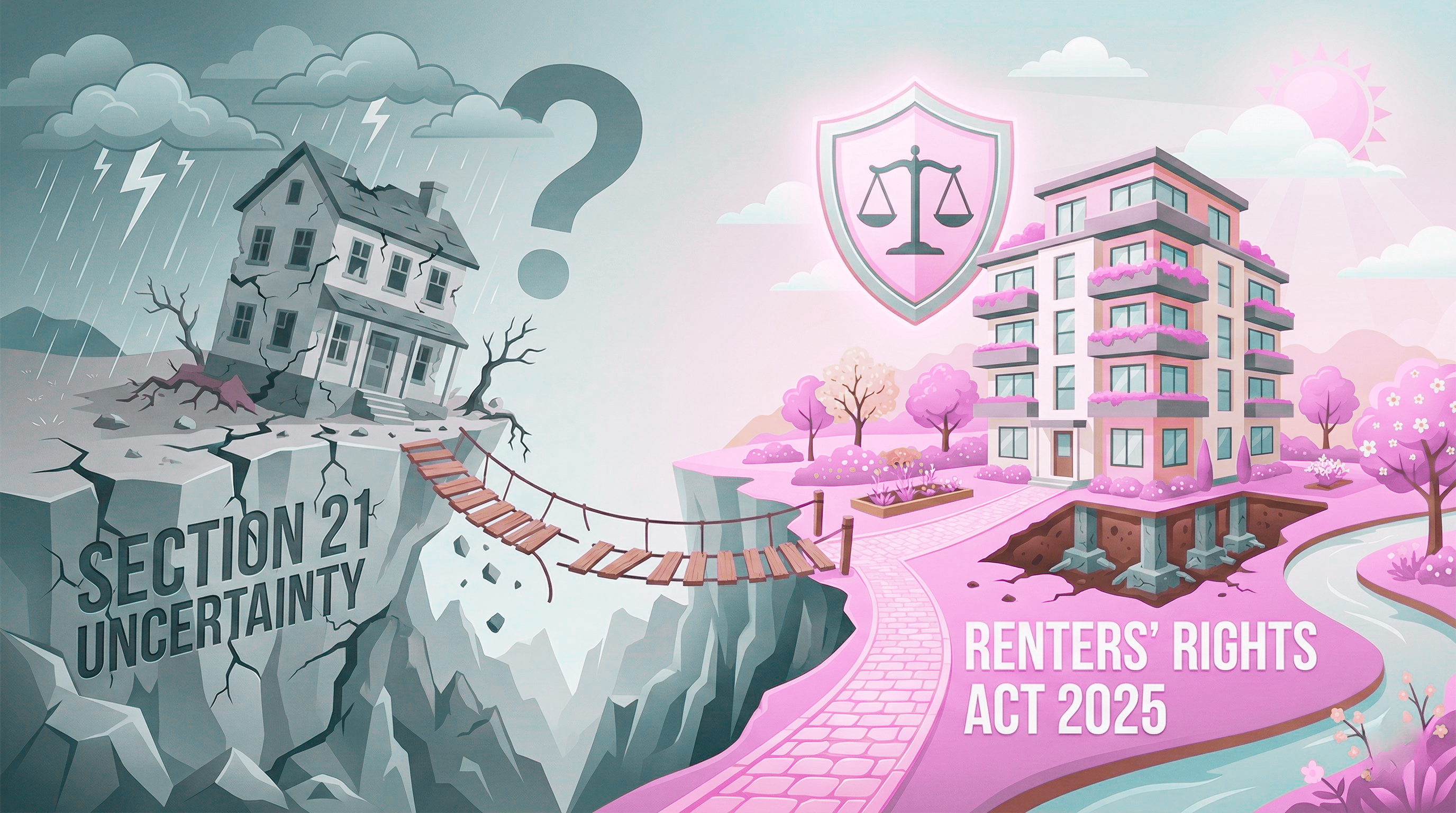
How the eviction process works before 1 May 2026
Before 1 May 2026, the eviction process is:
1. The landlord serves a written notice
The notice is section 21 or section 8. You should check the dates, your name and address, and whether the right form and notice period have been used.
2. The landlord starts a possession claim in the county court
For section 21 this can be a paper based claim. For section 8 there is normally a hearing where you can attend and explain your situation.
3. The court decides whether to make a possession order
The court can dismiss the case if the notice is not valid or the landlord has not proved their grounds, or it can make an order that gives a date when you must leave.
4. Enforcement by bailiffs or enforcement officers
If you stay beyond the possession date as issued by the Court, the landlord must apply for a warrant. Only court bailiffs or authorised enforcement officers can remove you.
It is a criminal offence for a landlord to change the locks, cut off utilities or harass you into leaving without a court order and warrant.
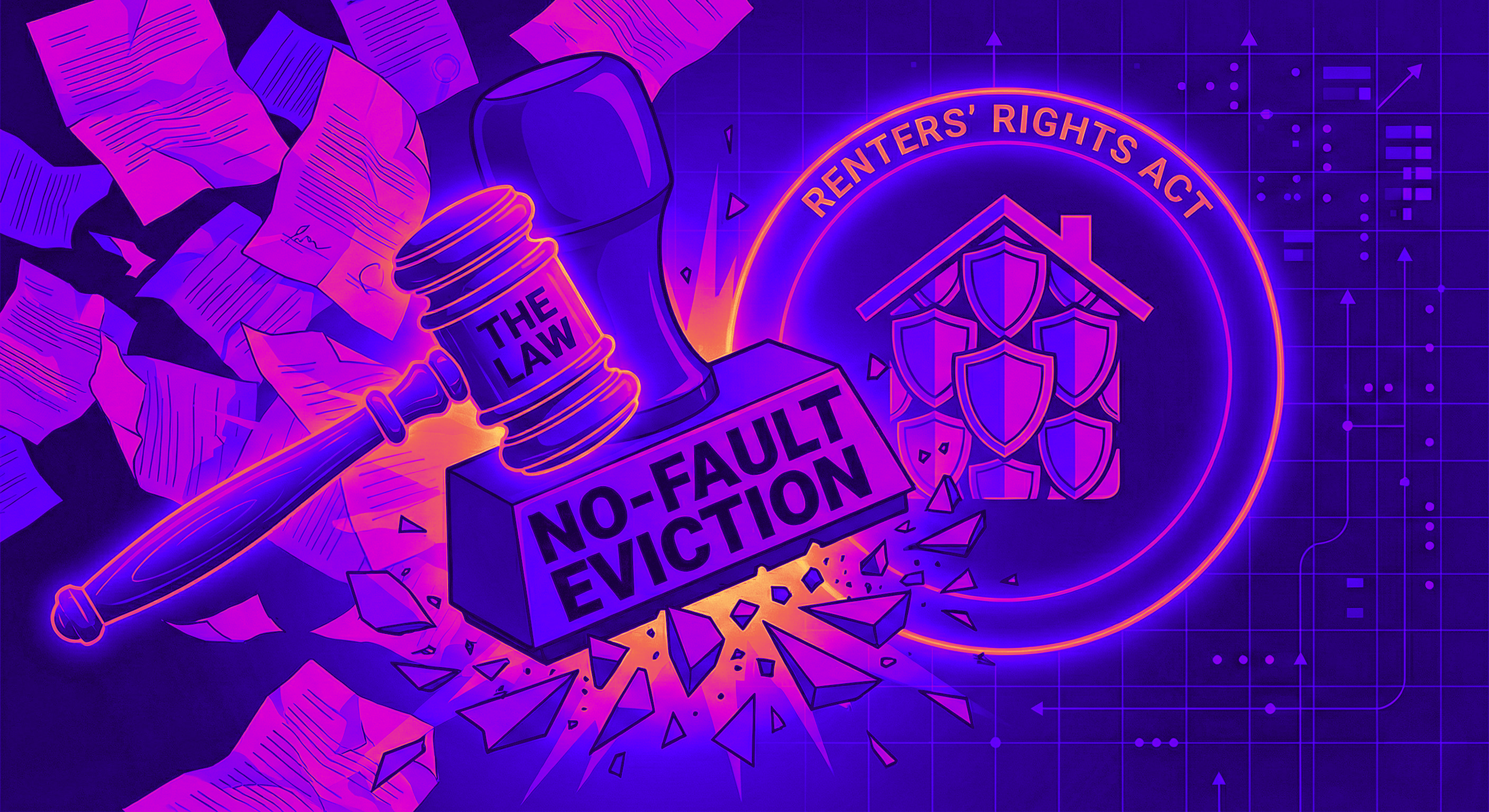
What changes after 1 May 2026 under the Renters Rights Act 2025
From 1 May 2026, the first phase of the Renters Rights Act 2025 is due to start for private renters in England. The main eviction changes are:
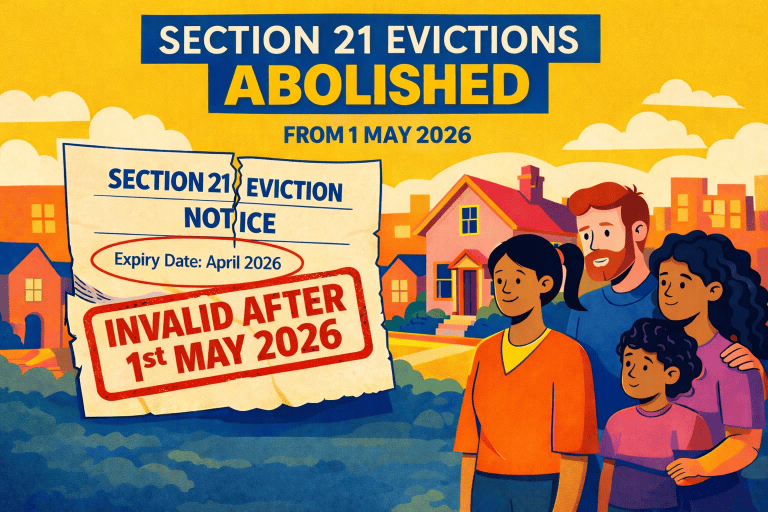
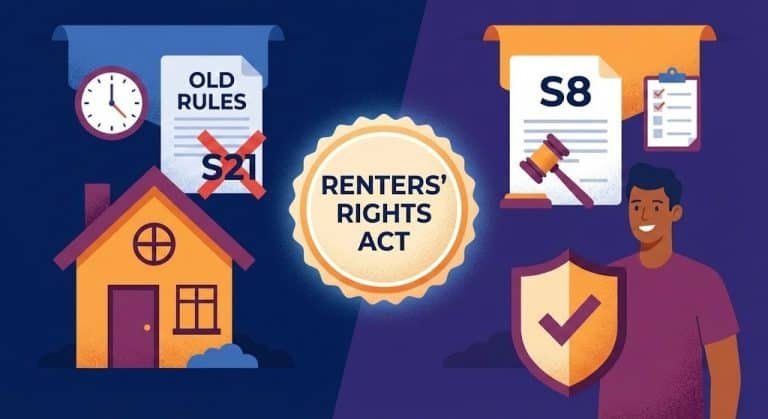
- No new section 21 eviction notices, the section 21 route will end for new notices
- Most private tenancies will become assured periodic tenancies with no fixed end date
- Landlords will only be able to evict you by proving legal grounds using a notice based on section 8 and a court claim
The grounds for possession will be updated. There will still be grounds for serious or repeated rent arrears, antisocial behaviour, and situations where the landlord needs to sell or move back in. Some grounds will require the court to grant possession if they are proved, others will allow the court to look at what is reasonable in your case.
The Act also:
- Limits rent increases, normally to once per year, with a right to challenge unfair rises
- Restricts rent bidding and excessive rent in advance
- Bans blanket refusals of tenants with children or tenants who receive benefits
These changes are intended to give you more security and reduce the risk of a sudden eviction.
Transitional rules around 1 May 2026
If your landlord serves a valid section 21 eviction notice before 1 May 2026, they will have a limited time to start a possession claim using that notice. After that deadline, they should usually have to rely on the new grounds based system instead – as set out in the Renters’ Right Act 2025.
This means:
- Section 21 cases can still appear in court for a period after 1 May 2026
- Dates on any section 21 notice and any claim form are critical, especially if they fall close to 1 May 2026
Because detailed regulations and court rules will set the final timetable, always get up to date advice on how the transitional rules apply to you.
Practical tips if you face eviction
If you receive any eviction notice, whether before or after 1 May 2026:
- Keep paying your rent
- Take clear photos of the notice and note the date you received it
- Gather your tenancy agreement, deposit documents and safety certificates
- Contact your local council housing team if you may become homeless
- Get advice from a housing solicitor, law centre as soon as possible
Early advice can help you challenge an invalid section 21 eviction notice, negotiate more time, or defend a claim under the new Renters Rights Act 2025 system.
Important disclaimer
This article is general information for private tenants in England only. It summarises complex law, including the Housing Act 1988 and the Renters Rights Act 2025, and reflects the position currently planned by the government. It is not legal advice and must not be relied on as a substitute for advice on your specific situation. Always speak to a qualified solicitor about your own case.