
What are my New rights under the Renters’ Right Act (England)
This guide reflects current proposals in the Renters’ Rights Act for England only as Scotland, Wales and Northern Ireland have different rules.
In a nutshell
- You’ll have a clear legal right to request a pet, and landlords must not unreasonably refuse.
- No blanket “no pets” bans. Each request must be assessed on its own facts.
- Pet insurance may be required as a permitted payment to cover damage.
- No extra non-permitted fees. Separate pet deposits that breach the deposit cap are not allowed.
- Fast decisions. Landlords must reply in writing or request more information within 28 days of your written request.
- Private rentals only. Social housing tenancies are excluded.

How will the Renters’ Right Act affect Pet Owner Tenants?
Private tenants gain a legal right to ask for permission to keep a pet. Landlords must:
- Deal with the request promptly by providing a written decision or reasonable follow-up questions within 28 days
- Consider the request fairly and avoid blanket refusals
- Avoid non-permitted charges (pet damage insurance may be required, but add-on fees that break the deposit cap are not)
- Give reasons if refusing
Tenants must make the request in writing and include a full description of the pet.

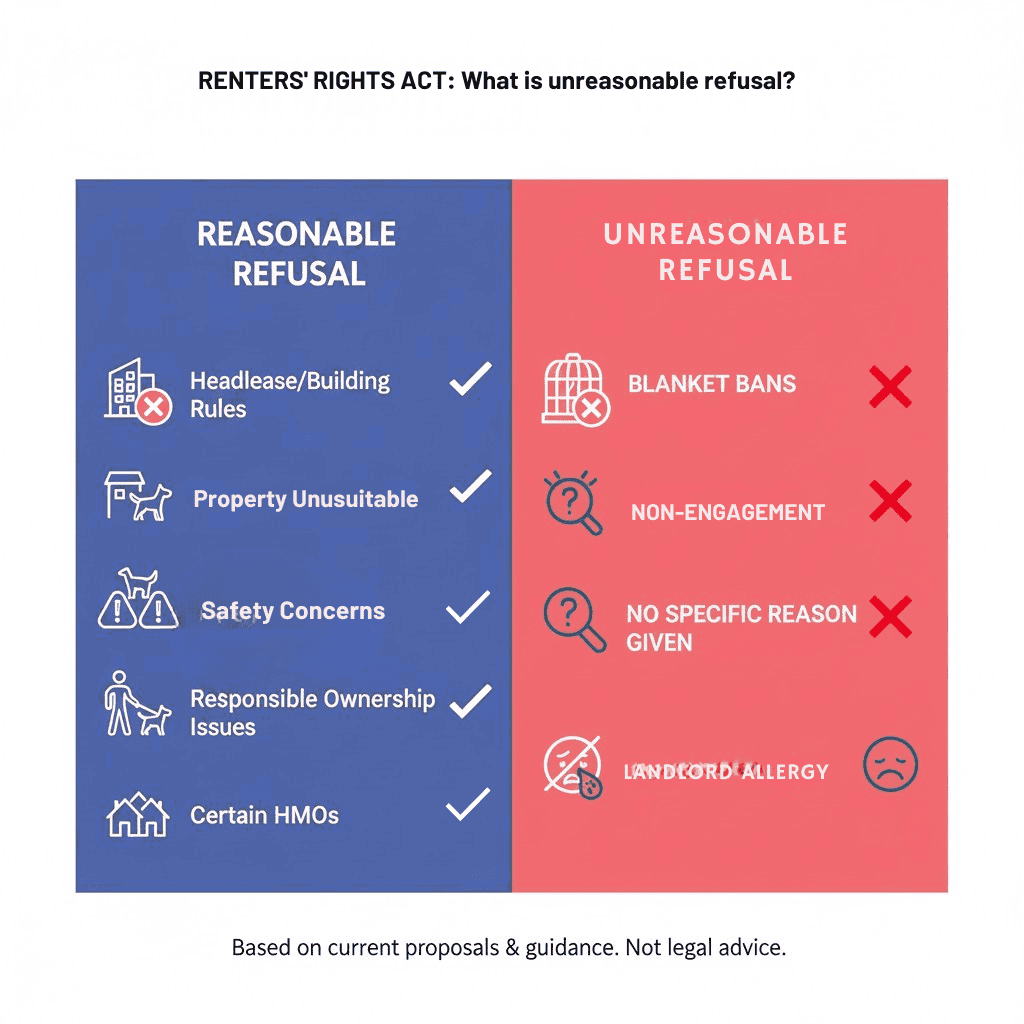
What counts as an unreasonable refusal?
The Renters’ Right Act does not hard-define this. Government guidance and case outcomes will shape this understanding. Reasons more likely to be reasonable include:
- Headlease or building rules that ban pets, or where superior-landlord consent is required and refused despite reasonable efforts
- Property unsuitability, for example a large dog in a very small flat with no outdoor space
- Welfare or safety concerns, such as evidence of serious past damage or nuisance, or prohibited breeds
- Too many animals for the size or type of property
- Responsible-ownership concerns, supported by credible evidence
- Landlord allergies in genuinely relevant circumstances
- Certain HMO arrangements, especially where it is not a single joint tenancy
Refusals based on a blanket policy, or without weighing the specific facts of your request, are more likely to be unreasonable.
How should I ask to keep a Pet under the Renters’ Right Act?
- Write to your landlord or agent by email.
- Describe the pet: species, breed, age, size, temperament, microchip or ID.
- Show responsible ownership: vaccinations, flea and worm treatments, neutering if applicable, training certificates, pet insurance quote or policy, and a simple daily care plan.
- Provide references from a previous landlord and/or a vet or trainer if you can.
- Offer reasonable safeguards: agree to keep communal areas clean, repair damage, and arrange pet damage insurance if requested.
- Keep records of all correspondence to track the 28-day deadline.

What should I do if the Landlord says no to me keeping a pet?
If refusal still seems unreasonable, you can challenge it through the Private Rented Sector Ombudsman (free) or through the courts. Both sides can submit evidence, and a decision will be made on the merits.
Ask for the reasons in writing.
Reply briefly to each point and offer proportionate safeguards.
FAQs
Can my landlord charge a separate pet deposit?
No. The Renters’ Right Act points to pet insurance as the fair way to manage risk, rather than add-on deposits.
Do these changes apply to social housing?
No. The proposals apply to private rented tenancies only. Social housing is expressly excluded.
What if the building lease bans pets?
A landlord can refuse where a superior lease bans pets, or where superior-landlord consent is required and refused, provided the landlord took reasonable steps to obtain that consent.
How long can my landlord take to decide?
They must decide in writing or ask for more information within 28 days of your written request.
What evidence helps my case?
Vaccination records, training certificates, pet insurance, references from a prior landlord, and a simple care plan.
Next steps for tenants
- Make your request in writing and start the 28-day clock
- Attach your evidence pack
- Offer reasonable safeguards and keep communications civil and factual
- Escalate to the Ombudsman if the refusal looks blanket or unreasoned or consider court action.
Disclaimer: This guide is general information for England only and not legal advice. The Renters’ Rights Act has not been implemented yet and you should get personalised advice before taking action.