
When Can My Landlord Legally Evict Me Under the New Renters’ Rights Act? (England)
Updated: October 2025
Quick answer
• Landlords can only evict using legal “grounds for possession” and, if you don’t leave, they must prove the ground in court. Mandatory grounds mean the judge must grant possession if proven; discretionary grounds let the judge decide if eviction is reasonable.
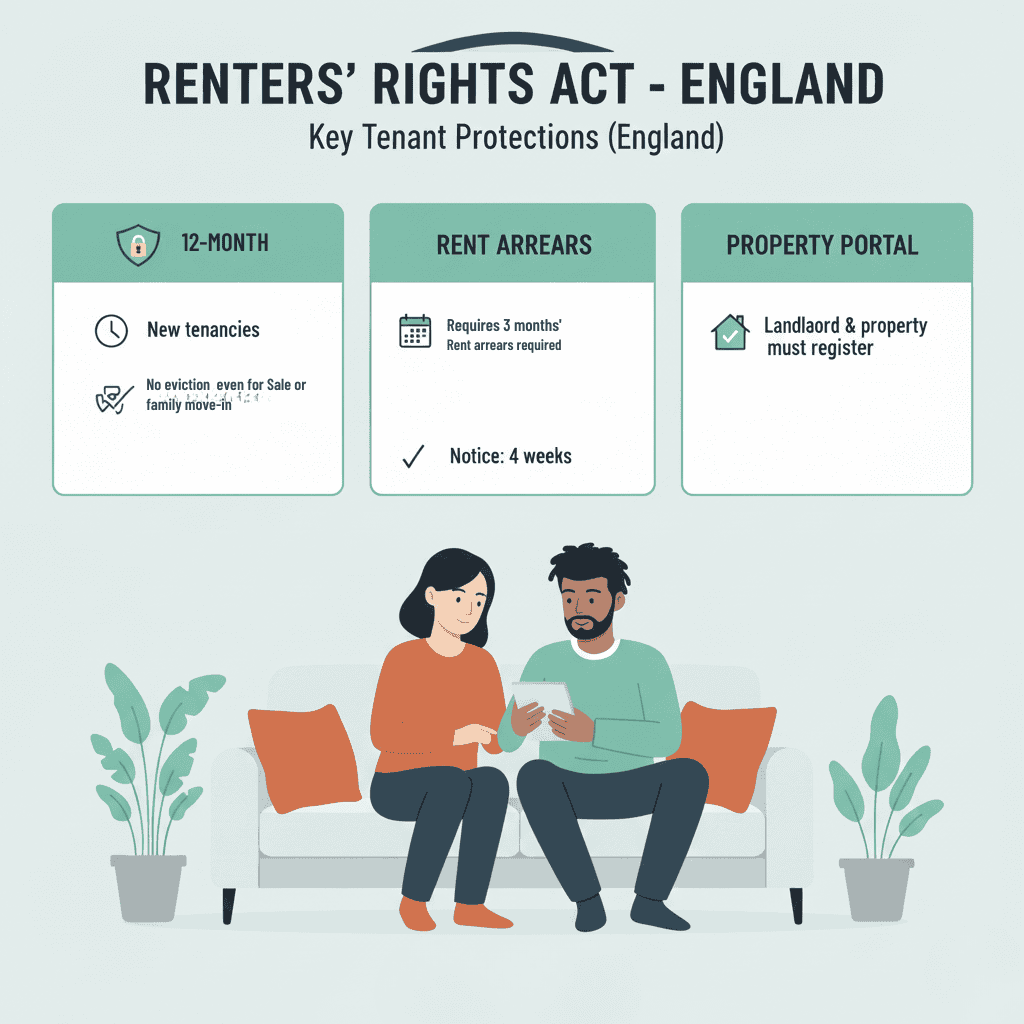
• There is a 12-month protected period at the start of a new tenancy where your landlord can’t evict just to sell or move in. If used after that, these grounds require 4 months’ notice.
• The mandatory rent-arrears threshold is 3 months’ arrears (or 13 weeks if rent is weekly or fortnightly). The notice for this ground is 4 weeks.
• The Renters’ Rights Bill is now law (the Renters’ Rights Act). Some parts start later on phased commencement dates announced by government.

What are “grounds for possession” in the Renters’ Right Act 2025?
These are the specific situations set in law that allow a landlord to reclaim a home, such as serious rent arrears, serious anti-social behaviour, selling the property, or the landlord (or close family) moving in. If you don’t leave after notice, your landlord must start a court claim and show evidence that the ground applies. Judges must grant possession on mandatory grounds; for discretionary grounds, they decide what’s reasonable on the facts.
Can I be evicted if I’ve done something wrong (at Fault)?
Your landlord can serve notice for fault-based grounds at any time during the tenancy. Key examples include:
• Serious rent arrears: Mandatory if you owe at least 3 months’ rent both when notice is served and at the court hearing (13 weeks if you pay weekly or fortnightly). Notice is 4 weeks.
• Anti-social behaviour: For the most serious behaviour and criminality, the process can be very fast; for wider anti-social behaviour, timings depend on the facts and court powers.
• Property damage or breach of tenancy: Discretionary grounds with short notice periods. The court decides whether eviction is reasonable.

Can I be evicted if my landlord wants to sell or move?
Sale and landlord or close-family move-in are mandatory grounds, with built-in tenant protections:
• 12-month protection: These grounds cannot be used in the first 12 months of a new tenancy.
• 4 months’ notice: If used after that point, the notice must be at least 4 months.
• Evidence: If you don’t leave and it goes to court, the landlord must show a genuine intention to sell, or to move in (or for a close family member to move in).
Other situations where eviction can happen:
The law includes tailored grounds to keep essential housing working:
• Student HMOs needed for a new group in line with the academic year
• Supported accommodation where the support is no longer needed or appropriate
• Temporary accommodation used to meet homelessness duties, no longer required
• Major redevelopment or demolition that can’t reasonably be done with you in place
What if my landlord isn’t on the Property Portal?
Compliance checks can block possession on most grounds:
• Private Rented Sector Database (Property Portal): If a landlord hasn’t registered themselves and the property, the court cannot grant possession on many grounds. Serious anti-social behaviour grounds are a key exception.
FAQs
When will the renters’ Rights Act changes apply?
The Act received Royal Assent on 27 October 2025. The government will confirm exact start dates and phasing (for example, the PRS Database and Ombudsman).
What evidence does my landlord need?
It depends on the ground. For a sale ground, evidence could include instructions to an estate agent and conveyancer. For a family member moving-in, the evidence may include statutory declarations and proof of genuine intention. The court weighs the evidence on the facts of each case.
Can I be evicted for any rent arrears under the Renters’ Right Act 2025?
The mandatory ground needs 3 months’ arrears at notice and at the hearing (13 weeks if rent is weekly or fortnightly).
How long do I have after a possession order?
Notice periods depend on the ground (from very short for the most serious anti-social behaviour to 4 months for sale or move-in). If you don’t leave by the date in the order, the landlord can apply for enforcement by bailiffs.
Resources:
Government guide to the Renters’ Rights Bill/Act: https://www.gov.uk/government/publications/guide-to-the-renters-rights-bill/guide-to-the-renters-rights-bill
Renters’ Rights Bill/Act collection page: https://www.gov.uk/government/collections/renters-rights-bill
Disclaimer
This page is general information for England and is not legal advice. Parts of the law start on different dates. Always check the latest government guidance or get tailored advice for your situation.