
Can You Finally Get That Dog/Cat/Pink Panther? Your Complete Guide to Pet Rights Under the New Act
Super Speedy Summary:
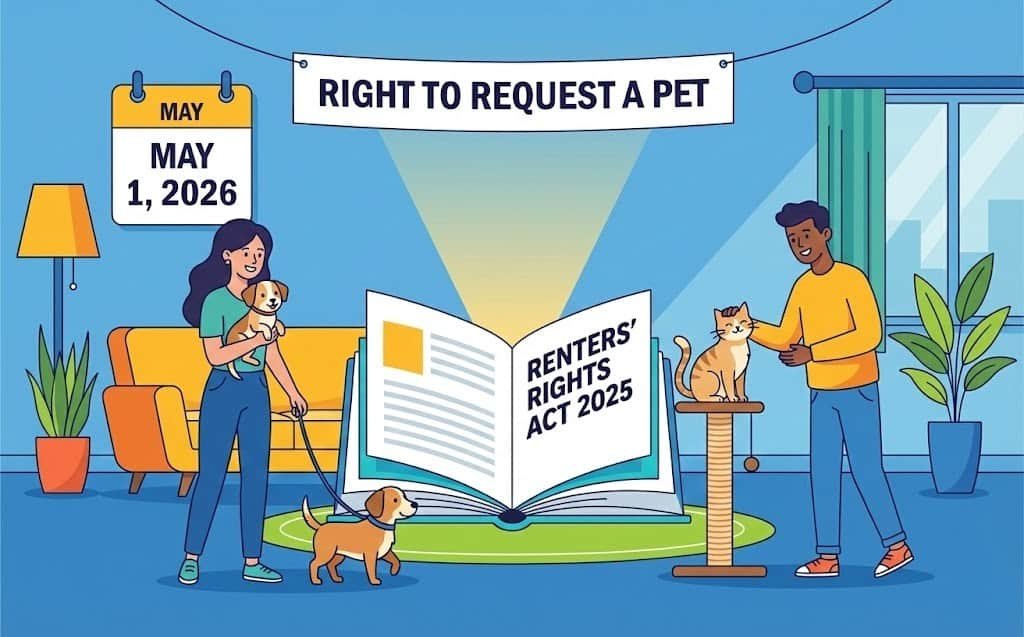
From 1 May 2026 the Renters Rights Act 2025 gives private tenants in England a statutory right to request permission to keep a pet. Your landlord must deal with your written request within clear time limits and cannot refuse unreasonably, although this is not an automatic right to keep any pet you like. Existing no pets clauses cannot override the new implied term, but other laws such as the Tenant Fees Act still limit what you can be charged. You may be able to challenge unreasonable refusals through the court and, once it is operating, through the new Private Rented Sector Ombudsman.
That “no pets allowed” clause in your contract is about to lose its teeth, but there is a right way to ask.
This guide is for private renters in England. Social housing and renting in Wales or Scotland have different rules.
Keeping a Pet rights now, and what changes on 1 May 2026
Before 1 May 2026:
- There is no general statutory right to keep a pet.
- Whether you can have a pet depends on your tenancy agreement, any superior lease, and general consumer law fairness arguments.
- The Tenant Fees Act 2019 already limits what extra payments your landlord or agent can charge, for example capping most deposits at five weeks rent (even if you have a pet).
From 1 May 2026:
Phase 1 of the Renters Rights Act 2025 starts on 1 May 2026. One key change is a new implied term in most private assured tenancies in England.
In simple terms, it says:
- You can request to keep a pet at your home.
- Your landlord’s consent must not be unreasonably refused.
- Your landlord must give or refuse consent in writing within strict time limits.
This implied term is written into the tenancy by law, even if your contract does not clearly state it about pets or says something different. Which means, even if the tenancy agreement states you cannot keep a pet, the new Renters’ Right Act 2025 would give you the power to request a pet and would force the landlord to comply with the rules in fairly considering the request. More about that later.

Which tenancies get the new pet right?
From 1 May 2026, in the private rented sector in England:
- Most new and existing private tenancies become assured periodic tenancies, so the pet right will usually apply.
- It does not apply where your arrangement is not an assured tenancy, for example many lodgers living with their landlord, some temporary homelessness placements, and certain types of student and long lease arrangements which the Renters’ Right Act 2025 treats separately.
- It does not initially cover social housing. Government plans to extend the wider tenancy reforms to the social rented sector later in Phase 2.
The Act defines a pet as an animal kept mainly for personal interest, companionship, or ornamental purposes.
How to make a valid pet request
To use your new right properly you must follow the rules as set out in the new Act.
Your request must:
- Be in writing
- Include a description of the pet, for example species, breed, age, size, and anything relevant such as assistance animal status
After you have made your request in writing, you landlord is under strict time limits to reply:
- The default rule is that your landlord must give or refuse consent in writing within 28 days of your request.
- They can extend that deadline only in limited situations, for example if they reasonably request more information about the pet within that first twenty eight days, then they can wait until seven days after you provide it to give their decision.
- If they need consent from a superior landlord and ask for that within the first twenty eight days, they can wait until seven days after the superior landlord replies.
- You and your landlord can agree on a later date in writing.
If you do not provide information your landlord has reasonably asked for, they do not have to respond at all.
Practical steps:
- Put your request in an email or letter, keep a copy, and note the date.
- Attach vet records, evidence of microchipping, training certificates, or previous landlord references if you have them.
- Consider offering sensible conditions, for example regular cleaning, flea treatment, and prompt repair of any damage.
When can a landlord say no?
The Act does not give you an automatic right to keep any animal you choose, it gives you a right to a fair, reasoned decision.
The law lists some circumstances where refusal is clearly reasonable, for example:
- Keeping the pet would put the landlord in breach of an agreement with a superior landlord, for example a head lease that forbids pets.
- The head lease allows pets only with the superior landlord’s consent, the immediate landlord has taken reasonable steps to obtain that consent, and the superior landlord has refused or not responded.
Beyond those examples, courts will develop what counts as “reasonable” over time. Likely relevant factors will include:
- Genuine health and safety risks
- Serious overcrowding or property layout that makes a particular animal clearly unsuitable
- Local authority licensing or animal welfare restrictions
- The particular animal’s history of aggression or nuisance
By contrast, a refusal that is based only on personal dislike of pets, or the administrative inconvenience of considering requests, is at real risk of being viewed as unreasonable.
What is a Superior Landlord?
From a tenant’s point of view, a superior landlord is basically your landlord’s landlord. You pay rent to your own landlord or agent, but they might not actually own the property, they might be renting it from someone else who owns the building or holds a long lease. That person or company above them is the superior landlord. This matters because your landlord often has to follow the superior landlord’s rules, for example about pets or subletting, even if your landlord personally would be happy to agree with you.

What happens to “No Pets” clauses
From 1 May 2026, any term of an assured tenancy (AST) that tries to ban pets absolutely has to sit alongside the new statutory implied term that requires your landlord to consider that request and not refuse unreasonably.
In practice this means:
- A simple “no pets allowed” line in your contract cannot stop you sending a pet request.
- Your landlord cannot rely on that clause alone to refuse, they still have to apply the new reasonableness test and give reasons in writing.
- The clause may still allow the landlord to say no in genuinely reasonable cases, for example where a superior lease categorically bans pets and that cannot realistically be changed.
What if I quietly move in with a Pet?
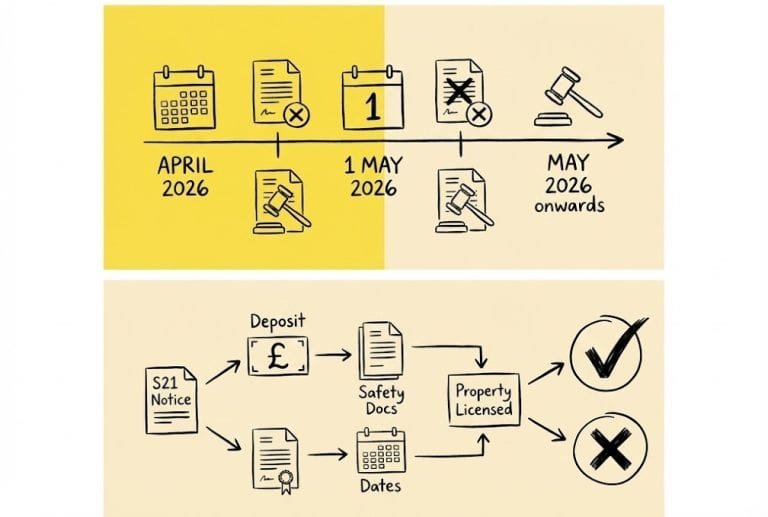
If your tenancy agreement bans pets or says you must get written permission before having a pet in the rental property, bringing in a pet is technically a breach of contract. Right now, before 1 May 2026, your landlord could simply rely on a “no fault” Section 21 notice to end your tenancy, and your having a pet in breach of the agreement could be part of the background they point to.
After 1 May 2026, Section 21 is abolished, but your landlord can still try to evict you for breach of tenancy, or ask the court for an order forcing you to remove the pet. The court would look at how serious the breach is, what impact the pet is having, and whether you have offered to put things right, but you would be starting from a weaker position because you broke the agreement first and only argued about reasonableness afterwards.
On top of that, if your landlord is bound by a superior landlord who bans pets, they may not legally be able to agree to your pet, even if they personally do not mind.
The new pet rules are designed to give you a clear, fair process to follow, not to give a ‘secret pet’ loophole. In practice, the safest option is to use your right to request a pet in writing, give proper details, and try to get consent before you bring the animal home. If you already have the pet, it is usually better to be upfront, make a proper written request under the new rules, and show you are acting responsibly, rather than hoping nobody notices.
6. Money, deposits and pet insurance
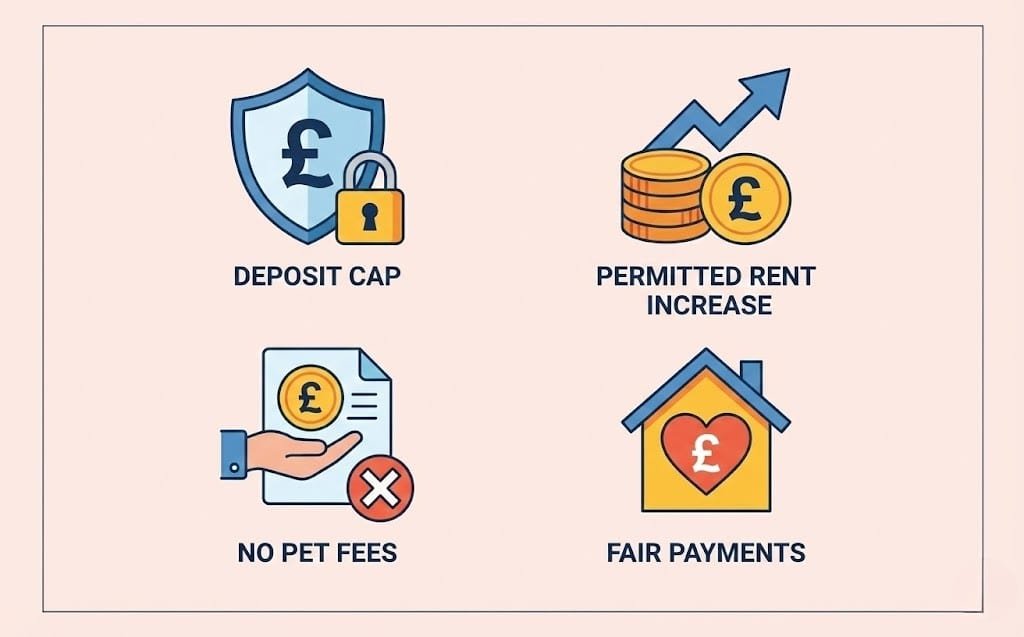
The Renters Rights Act 2025 changes rent advance rules but it does not remove the Tenant Fees Act 2019 caps on deposits and prohibited payments. This is beneficial for Tenants as it protects them from landlords demanding huge amounts of rent upfront whilst maintaining the protections which already existed from the Tenant Fees Act.
In summary:
- Your landlord cannot charge an extra deposit or top up that would take you over the legal deposit cap.
- Landlords cannot charge a separate “pet fee” or “pet deposit” if that would be a prohibited payment under the Tenant Fees Act.
- The government has talked about pet damage insurance in policy documents, but the Act itself does not yet create a specific pet insurance fee. Any change to permitted payments would come through later regulations.
- A landlord cannot demand you take out pet insurance as a condition of consent, as this remains a prohibited payment under the Tenant Fees Act. However, they can increase the rent (via the Section 13 process) to cover the risk of potential damage, but the rent must not be over fair market rate.
Challenging an unreasonable refusal to keep a pet
If a landlord unreasonably refuses consent, or simply fails to respond within the statutory time limits, that can amount to a breach of the implied term.
Depending on the exact circumstances of your situation, you may be able to ask a court to order the landlord to. However, before you do so, it is sensible to:
- Write back to the landlord, pointing out the new legal duty and asking them to reconsider.
- If that is not successful, take legal advice about a county court claim for breach of contract and, where appropriate, a specific court order and also compensation. You may also be able to seek the costs from the landlord, but seek legal advice before you start any legal process.
From late 2026 onwards, the government plans to roll out the Private Rented Sector Database and then the Private Rented Sector Ombudsman. Once your landlord is required to join the Ombudsman scheme, you should also be able to pursue a free complaint route about unreasonable refusals alongside court options.
Quick tenant checklist before you ask for a pet
- Read your tenancy agreement, note any pet clauses, but remember these cannot override your statutory right to make a request.
- Prepare a clear written request with full details of the animal and evidence of responsible ownership.
- Diary the twenty eight day deadline, and any extended dates if your landlord asks reasonably for more information or superior consent.
- Keep all correspondence in case you later need legal advice or to challenge an unreasonable refusal.
- If you have a telephone or in person conversation with your landlord, it is a very good idea to follow that up with an email confirming the conversation.
Disclaimer: This guide is for general information only, it is not legal advice for your specific situation. You should seek independent legal advice before taking action.