Is Your Rent Increase Lawful? How to Challenge Unfair Hikes Under the New Rules
Super Speedy Summary:
Guide for tenants in England on when a rent increase is legal under the Renters Rights Act 2025, how Section 13 rent increases work from 1 May 2026, when you can challenge an increase at the First tier Tribunal, and how the new rules stop back door evictions and limit rent in advance.
When a landlord suddenly announces a large and unfair rent rise it can be a stressful time leaving you wondering whether you should stick or twist. That stress and uncertainty is set to be addressed by the Renters’ Right Act. From 1 May 2026, the Renters Rights Act 2025 changes how rent increases work for most private tenants in England and gives you a clearer way to challenge unfair rent hikes.
This guide explains how to check if the rent increase is fair and how to use the First tier Tribunal if you need to challenge this.
How does Rent increases before and after the Renters’ right Act work?
Before 1 May 2026, the current Housing Act rules still apply. For most assured shorthold tenancies your rent can usually only go up if you agree, if your agreement contains a valid rent review clause, or if your landlord serves a formal Section 13 notice that proposes a new rent from a future date. You already have the right to ask the First tier Tribunal to decide the open market rent if you receive a Section 13 notice, but the Tribunal can decide you pay the less rent than demanded by the landlord, the same, or sometimes even higher rent. This changes under the Renters Right Act, which means if you take the matter to the First Tier Tribunal, it cannot decide you need to pay a higher rent.
From 1 May 2026, the Renters Rights Act 2025 updates this system. Section 21 no fault evictions are abolished for most assured tenancies and rent increases move onto a clearer once a year pattern linked to the Section 13 procedure. After that date, the key questions are whether your landlord has used a valid Section 13 rent increase notice, whether at least twelve months have passed since any last increase, and whether the proposed figure is broadly in line with similar properties in your area. If your notice is dated very close to 1 May 2026, transitional rules may apply, so it is sensible to get specific legal advice.
How Section 13 rent increases work from May 2026
From 1 May 2026, most private landlords will only be able to increase rent by using the statutory Section 13 process. In practice this means your landlord must give you a written Section 13 notice in the correct form, which sets out the new rent and the date it is meant to start, and they must give you at least two months notice. Informal texts, emails or conversations will not change the legal rent once the Act is in force.
The landlord will only be able to use Section 13 once in any twelve month period. Any rent review clause in your tenancy agreement still has to sit within these rules and cannot be used to bypass or trump the once a year limit or the minimum notice period. If you are paying your rent on time and your landlord demands a higher amount without serving a proper Section 13 notice, or with less than two months warning, you can consider treating that demand as invalid and continue paying your current rent while you seek legal advice.
Challenging a rent increase at the First tier Tribunal
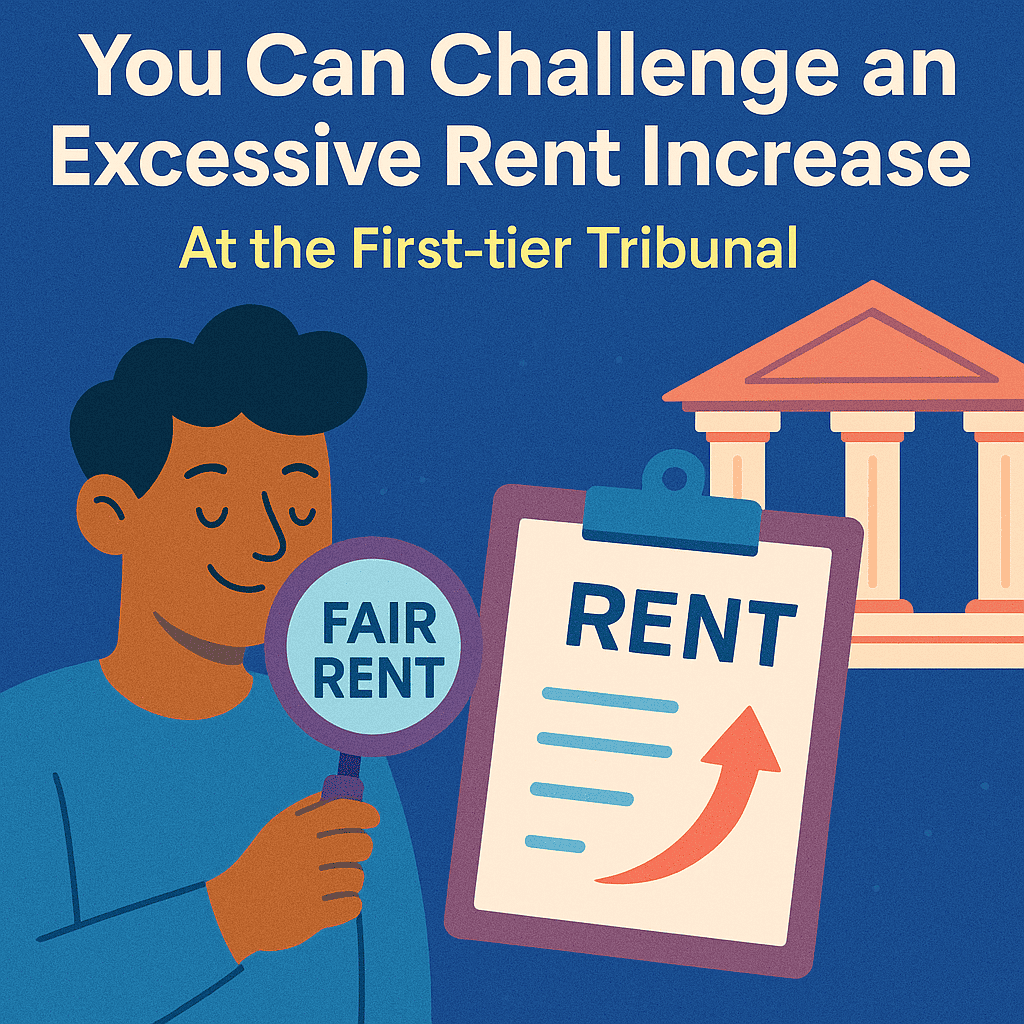
If you think the proposed rent is too high, you can challenge a Section 13 rent increase at the First tier Tribunal. This is sometimes called a rent assessment or a rent challenge. The Tribunal does not decide what you personally can afford. Instead, it works out the open market rent for a similar property in your area, taking into account size, location and condition.
Under the new rules (after 1 May 2026), if you challenge a Section 13 notice the Tribunal cannot set a rent that is higher than the figure your landlord has asked for. The final rent will either be the amount in the Section 13 notice or a lower rent that reflects the true market level. That makes it safer to challenge your rent increase if you have evidence that your landlord is overpricing your home. You need to apply before the new rent is due to start, so do not ignore the Notice. Collect adverts for comparable properties, written opinions from local agents if possible, and a record of the rent you have been paying so far to support your case
Excessive rent increases, back door evictions and rent in advance
The Renters Rights Act 2025 is designed to stop landlords using very large rent increases as a way of forcing tenants out. These are sometimes called back door evictions, where the rent is pushed up so far that you are priced out of your own home. Once Section 21 has been abolished, tribunals will look closely at whether a rent increase is genuinely in line with local market rents or is being used as pressure to make you leave, for example soon after you have complained about disrepair or asked about your rights.
The Act also limits the use of rent in advance as a pressure tactic. Once the new rules are fully in force, private landlords and letting agents will not be able to demand (or accept) many months of rent in advance as a condition of letting or of keeping the tenancy, and once your tenancy agreement is signed they will not be able to insist on more than one months rent in advance. If a landlord says you must accept a big rent increase or pay several months up front or you will be asked to leave, that is a strong warning sign and you should get urgent legal advice.
What to do if you receive a rent increase notice
When you receive a rent increase notice, start by checking the date and whether it is before or after 1 May 2026. Then ask yourself three questions:
- Is this a proper Section 13 notice in writing.
- Has the landlord waited at least twelve months since the last rent increase.
- Has the landlord given enough notice, at least one month now, and at least two months once the new rules start.
Next, search for similar properties in your local area and see what they are being advertised for. If the proposed rent looks much higher than the market rent, or if the timing suggests that your landlord may be trying to push you out, consider a First tier Tribunal rent challenge.
Throughout the process keep paying your current rent on time and keep written records of any conversations or messages about the increase. The new Renters Rights Act 2025 rent rules are designed to give you a clear, enforceable way to challenge unfair rent increases and to stay in control of your tenancy.
Disclaimer: This article gives general information for tenants in England, it is not legal advice. The Renters Rights Act 2025 and related regulations are detailed, and how they apply will depend on your tenancy and dates, so you should get independent legal advice about your own situation before deciding what to do.