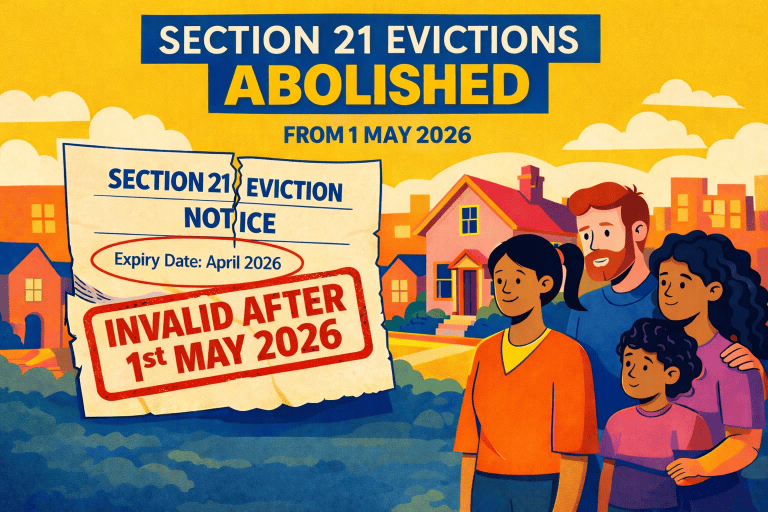
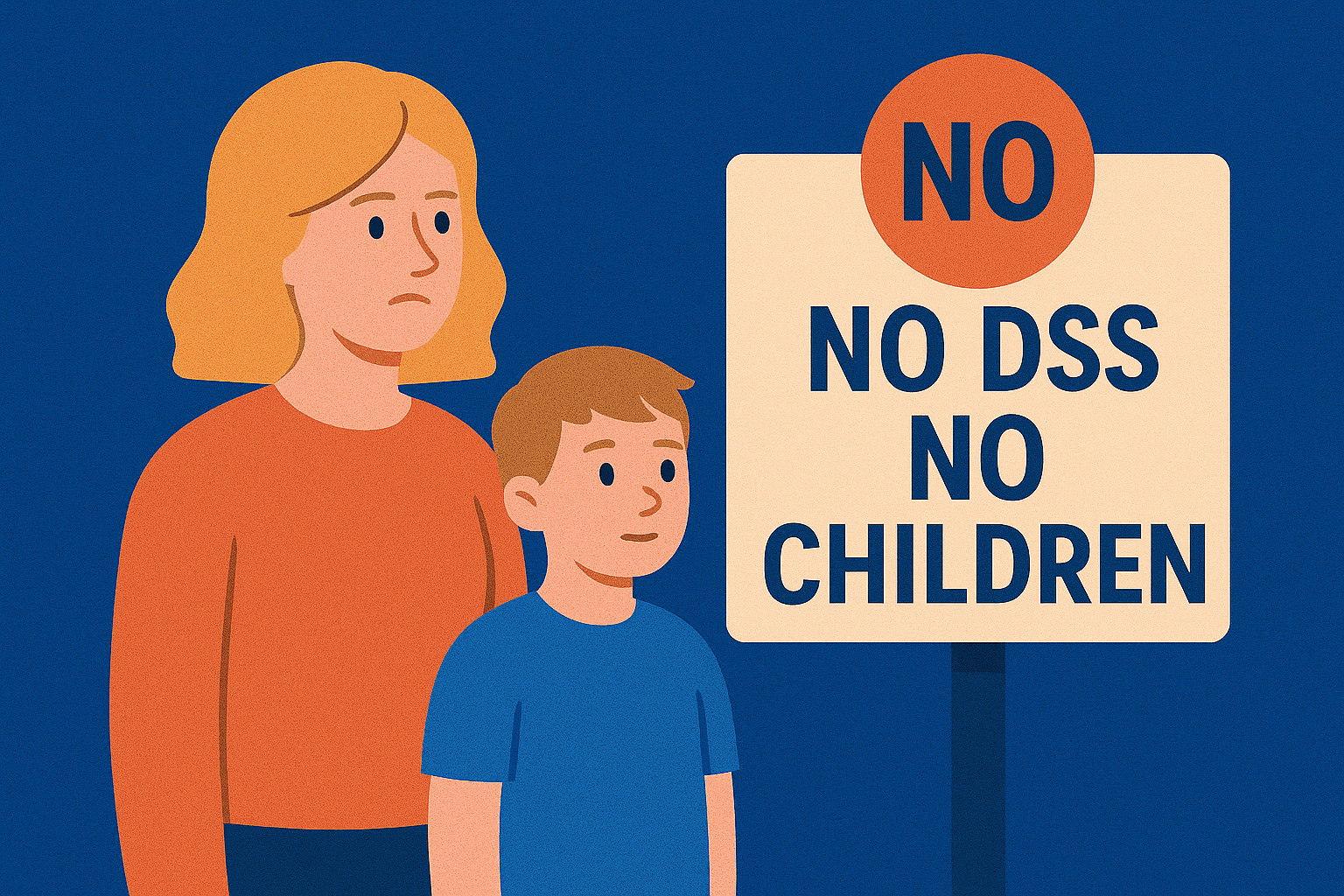
Renters Rights Act Protection: Landlords cannot turn you away anymore simply for having children or being on benefits
Super Speedy Summary:
This guide explains how the Renters’ Rights Act 2025 protects tenants in England with children or on benefits from discrimination in the private rental sector. From 1 May 2026, landlords and letting agents must not refuse viewings or tenancies, or include contract clauses, just because you have children or receive benefits. Local councils can issue civil penalties of up to £7,000 per breach and tenants can still rely on Equality Act 2010 rights. The article covers what counts as discrimination, how affordability checks should work, how to gather evidence and how to complain.
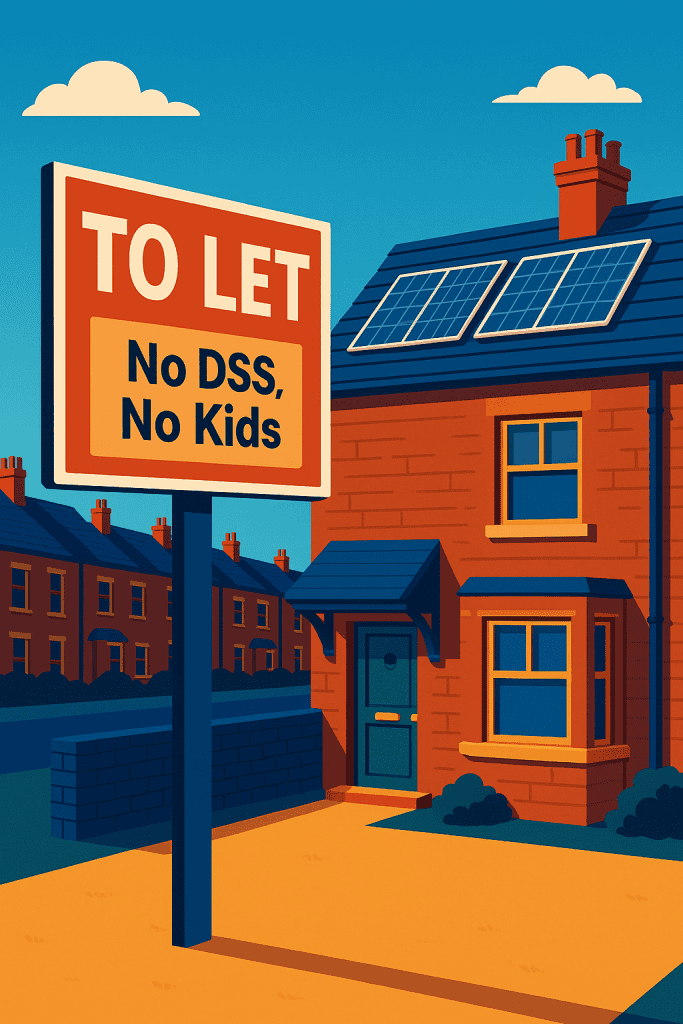
If you have ever seen a listing saying “no DSS”, “professionals only” or “no children”, you will know how it feels to be blocked from a home before anyone even looks at your references. The Renters’ Rights Act 2025 is designed to stamp this out. From 1 May 2026, it will be unlawful in England for landlords and letting agents to treat you unfairly because you have children or because part of your income is from benefits. The key is to understand what is changing and how to prove it when something feels wrong.
Tired of landlords ghosting you the moment you mention benefits? The law is about to be on your side, but you still need to know your rights.
Do these protections apply yet?
Up to 30 April 2026, the new discrimination chapter of the Renters’ Rights Act is not yet in force. That means there is not yet a specific housing law ban on “no benefits” or “no children” adverts in England. However, you may still be protected by the Equality Act 2010. Blanket rules such as “no benefits” or “no single parents” can be indirect discrimination where they disadvantage women, disabled people or other protected groups. County court decisions have already found that these sorts of policies can be unlawful.
The problem is that Equality Act claims are complex and usually need legal help. From 1 May 2026, the Renters’ Rights Act adds clear, housing specific rules on discrimination in the rental market. Those sit alongside the Equality Act and are designed to be easier to enforce.
What changes on 1 May 2026 for families and benefit claimants?
From 1 May 2026, new rules of the Renters’ Rights Act 2025 come into force for most private tenancies in England.

A “relevant person” which means the prospective landlord or anyone acting for them, such as a letting agent, must not in relation to a private letting:
- stop you enquiring about a property, getting information, viewing it or entering into a tenancy, just because a child would live with you or visit you, or
- apply policies or practices which make people with children less likely than others to end up renting the property.
This is legal speak, but essentially a child means anyone under 18. It does not matter whether they are your child, a foster child, a grandchild or another young person who lives with you or visits.
The same protection applies where the reason is that you are, or might be, a “benefits claimant”. That covers Universal Credit, Housing Benefit and a wide range of other social security payments, including where benefits are paid directly to the landlord. It also covers people who receive council tax reduction. If any of your income comes from benefits, you are in the protected group.
The Act also deals with discriminatory terms in contracts. Clauses in tenancy agreements, superior leases or insurance policies that say “no children” or “no benefits” are treated as having no legal effect in most, if not all cases. In other words, once the new rules are in force, a landlord cannot rely on those clauses to justify turning you away.
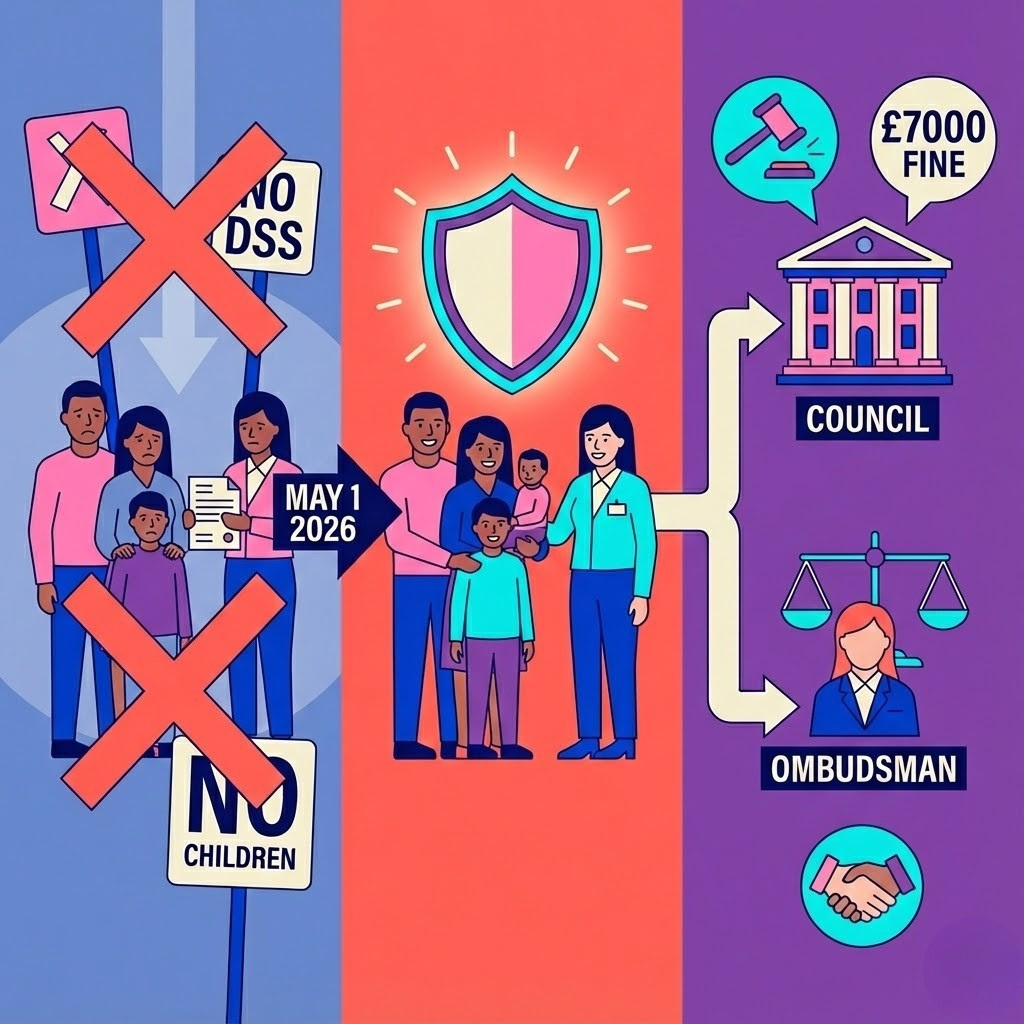
There are limited exceptions where an insurer insists on such a term and certain other tests are met, but in normal private rented sector situations, blanket “no children” and “no benefits” clauses will not stand.
Can landlords still check affordability After 1 May 2026?
Yes. The Act is clear that nothing in the new discrimination chapter stops landlords or agents taking income into account when they decide whether you can afford the rent.
What they cannot do is treat people with children or on benefits as if they have no income at all, or apply blanket rules that only really hit those groups. A landlord can decide that a rent is too high for your total income, including benefits, and refuse the application on that basis. They cannot lawfully say that benefit income never counts, or insist on far harsher conditions only because you claim benefits, for example many months of rent .
For you, the practical point is this: If you meet their stated income or affordability test once your wages and benefits are both counted, and they refuse you only after they find out about your benefits or your children, that is exactly the kind of situation this law is designed to address.
What does Rental Discrimination Look like?
Discrimination in the rental market is often subtle. It might look like this.
You might mention that your children stay with you part of the week and are suddenly told that the property is no longer available, but it stays advertised and a someone without children gets a viewing.
You send an enquiry about a flat, are invited to view, and then the agent goes silent after you mention that you receive Universal Credit.
You call about a house, the agent hears children in the background and are told it is not suitable for children or the landlord does not accept benefit claimants, even though the advert did not say this.

Under the Renters’ Rights Act 2025, what matters is whether the landlord or agent is preventing you from moving forward, or applying a policy which makes your particular group (that is those with children or on benefits) less likely to get the tenancy.
How do local councils enforce the rules?
From 1 May 2026, local housing authorities will be responsible for enforcing these discrimination rules in England. If a council is satisfied that a landlord or agent has breached the bans in section 33 or 34, it can impose a civil financial penalty.
The maximum penalty for discrimination under this section of the law is currently set at £7,000 per breach. Councils can issue further penalties if the unlawful conduct continues. In practice, this means a landlord or agent who repeatedly uses “no benefits” or “no children” policies risks multiple penalties.
How to prove discrimination and what action you can take
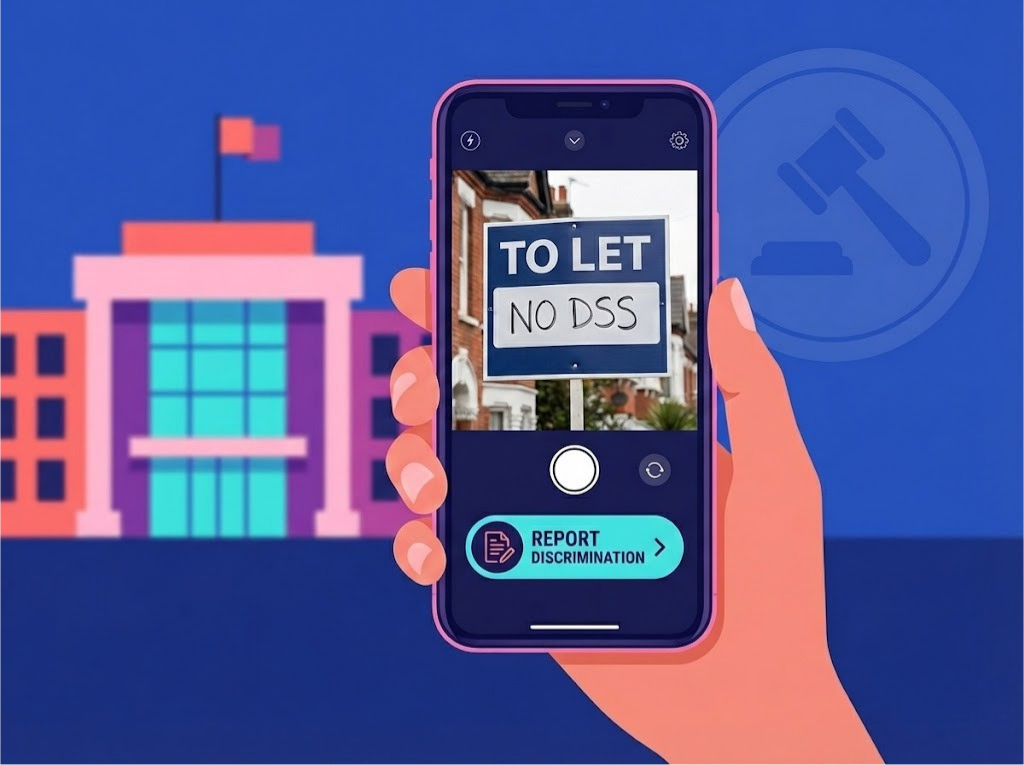
When you suspect discrimination, evidence is everything. Try to make your enquiries in writing so you have a clear trail. Save screenshots of property adverts, especially if they use phrases like “no DSS”, “no children” or “professionals only”. Keep copies of your messages and any replies. If you speak on the phone, note the date, time and who you spoke to, and write down exactly what was said.
With that evidence, you can complain in writing to the agent or landlord, referring to the Renters’ Rights Act 2025 rules on discrimination relating to children and benefits status. You can report the case, with your evidence, to your local council, who have powers to investigate and fine landlords and agents.
You may also have separate rights under the Equality Act 2010, particularly if you are disabled, a woman, or in another protected group. In some situations a solicitor may advise bringing a civil claim for compensation.
As the new Private Rented Sector Ombudsman is created from late 2026 and landlords are required to join by around 2028, you should also gain a free, independent complaints route where your landlord or agent is covered by the scheme.
The essential message is this: From 1 May 2026 in England, landlords and agents are no longer allowed to shut you out simply because you have kids or receive benefits. If they do, you can collect evidence and ask the council to use its enforcement powers to hold them to account.
Frequently Asked Questions: Discrimination, Benefits, and Children
Is it still legal for landlords to say “no DSS” or “no children” right now?
Until 1 May 2026, there is no specific provision in housing law banning these adverts, though they may already be unlawful indirect discrimination under the Equality Act 2010 if they disadvantage certain protected groups (e.g. women or disabled people). From 1 May 2026, Phase 1 of the Renters’ Rights Act 2025 comes into force. From this date, it will be unlawful for landlords and letting agents in England to prevent you from renting, viewing a property, or enquiring about one specifically because you have children or receive benefits. Blanket bans in adverts will therefore be unlawful from this date.
Does the new law protect tenants on Universal Credit and Housing Benefit?
Yes. The Act protects a “benefits claimant,” defined as anyone entitled to payments under the Social Security Contributions and Benefits Act 1992, the Welfare Reform Act 2012 (Universal Credit), or council tax reduction schemes. If a landlord or agent treats you less favourably because of this status, for example, by refusing to let you view a property, then this will be a breach of the new anti-discrimination rules.
Does the protection cover visiting children and shared care arrangements?
Yes. The Act defines a “child” as any person under the age of 18. The protection explicitly prohibits preventing a person from renting on the basis that a child would live with or visit them at the dwelling. This covers shared care arrangements where children stay overnight or visit regularly.
Will landlords still be allowed to check affordability if I am on benefits?
Yes. The Act explicitly states that landlords are not prohibited from taking your income into account when deciding if you can afford the rent. However, they cannot operate a blanket rule that disregards benefit income entirely. They must assess your ability to pay by considering all lawful sources of income, including benefits. If you pass the affordability check once benefits are included, refusing you simply because that income comes from the state would likely be unlawful discrimination.
Can a landlord ask me for extra rent in advance because I am on Universal Credit?
No. Under the new rules, asking for large amounts of rent in advance (e.g. 6 months) will be unlawful for all tenants, regardless of whether they are on benefits. From 1 May 2026, the Act bans landlords and agents from requesting or accepting rent in advance that exceeds the rental period (usually one month). This means a landlord cannot demand a large lump sum upfront as a condition of the tenancy, whether you are on benefits or not.
Are letting agents covered by the new discrimination rules as well as landlords?
Yes. The Act applies to any “relevant person,” which is defined to include the prospective landlord and any person acting on their behalf (such as a letting agent) . Both agents and landlords can be held liable for discriminatory conduct. This is an excellent piece of protection from the Act and ensures discrimination cannot occur through the backdoor.
What counts as proof if I want to report discrimination?
Written records are essential. You should save screenshots of adverts containing phrases like “no benefits” or “no children.” Keep copies of all emails, text messages, or portal enquiries. If you have phone conversations, write down the date, time, and exactly what was said immediately afterwards. Evidence that shows a pattern—such as a friend with a different profile getting a viewing for the same property when you were refused—can also be valuable evidence for enforcement authorities.
Who do I report a “no benefits, no children” policy to after 1 May 2026?
Your primary route is your local council (local housing authority). They have specific powers under the Act to investigate breaches and impose financial penalties on landlords or agents. The council can issue a fine of up to £7,000 for each breach of the discrimination rules. Repeated breaches can result in further penalties.
Can I get compensation if I have been refused because of benefits or children?
The Renters’ Rights Act 2025 focuses on penalties, which are fines paid by the landlord to the local council, rather than compensation paid directly to you. However, once the Private Rented Sector Landlord Ombudsman is established (starting late 2026), you will be able to seek redress (which may include compensation) through that scheme. If you want to claim compensation through the courts for discrimination before the Ombudsman is available, you would typically need to rely on the Equality Act 2010 (e.g. arguing indirect discrimination based on sex or disability), rather than the Renters’ Rights Act directly, however this is a complex question which requires specific legal advice.
How does all this link to the new Private Rented Sector Ombudsman?
The Ombudsman scheme is a separate part of the reforms that will be introduced in phases starting from late 2026, with mandatory landlord membership expected by 2028. Once your landlord is a member, the Ombudsman will provide a free, independent service to resolve disputes. They will have the power to order landlords to provide redress to tenants, such as apologies or financial compensation, for issues including unfair treatment and discrimination.
Do these rules apply in Scotland and Wales as well as England?
The implementation date of 1 May 2026 and the specific roadmap details discussed here apply to England. The implementation timelines and enforcement specifics for Wales and Scotland will be determined by the Welsh Ministers and Scottish Ministers respectively. If you rent there, you should seek local advice.
Disclaimer: This article is for general information only and does not constitute legal advice. For advice on your specific situation, you should speak to a solicitor, law centre or specialist housing adviser.