What should I receive before I agree a new tenancy from 1 May 2026?
Written Statement of Terms and Renters Right Act
Tenant Hive Super Speedy Summary
The Renters’ Rights Act 2025 creates a duty for landlords or their letting agent to give tenants a Written Statement of Terms for most new private rented assured tenancies. The detailed content is set by regulations.
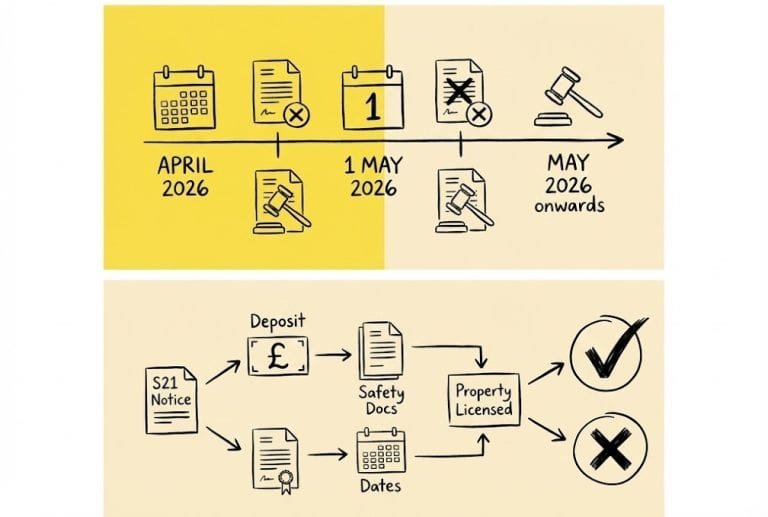
The Government’s official implementation roadmap says Phase 1 of the reforms, including the new tenancy regime and the requirement to give key information in writing, will come into force on 1 May 2026 and will apply to both new and existing tenancies.
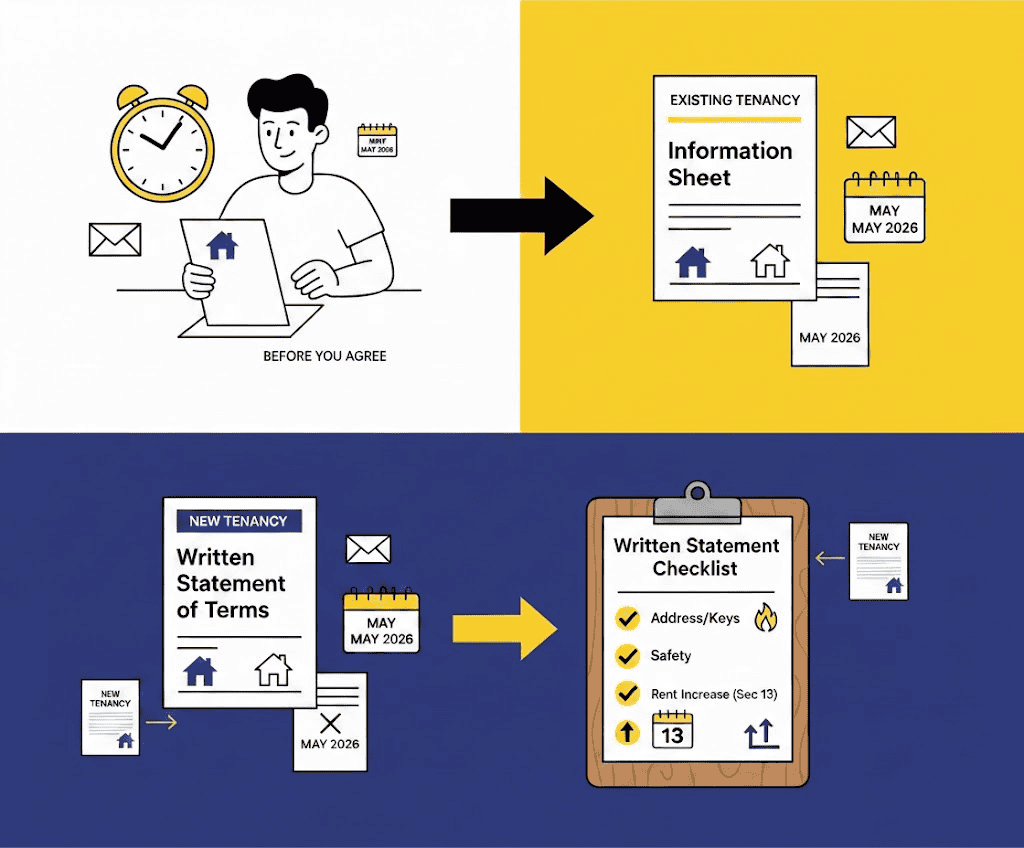
If you already have a tenancy that was created before 1 May 2026 and it has a written agreement, the roadmap says your landlord should give you the Government Information Sheet on or before 31 May 2026 and it is planned to be published online in March 2026. If your existing tenancy was agreed verbally, the roadmap says your landlord should provide a written summary of the main terms on or before 31 May 2026.

What is the Written Statement of Terms?
From the date the new Renter Right Act rules come into force, the Written Statement of Terms is a written record of the tenancy terms and other required information. The law requires it to be given before the tenancy is entered into, which includes signing, but can also include agreeing the tenancy online or agreeing in another way. You should be given sufficient time to read and understand what you are agreeing to before being asked to sign the tenancy agreement. Don’t feel rushed to do so. If you need more time – ask for it.
The Written Statement can be included inside a written tenancy agreement, or it can be a separate record of terms that you have agreed, but it must include the required information.
When Should I Receive The Written Statement of Terms?
For new private rented sector tenancies created on or after 1 May 2026, the roadmap says landlords will need to provide certain information about the tenancy to their tenants in writing.

Who Must Provide The Written Statement of Terms?
The legal duty is with the landlord. The law also recognises that a landlord can instruct someone else to do this on their behalf and that person can also have responsibilities under the law. For tenants, this often means a letting agent, but it can be another formally appointed party.
What must be included in the Written Statement of Terms?
The draft regulations published in January 2026 set out a detailed list of what must be included in the Written Statement of Terms. You should expect the Written Statement to cover the essentials in a way you can check.
The Written Statement of Terms should name the landlord and the tenant or tenants. It should give an address where you can serve notices on the landlord, including formal legal notices. It should confirm the address of the home and the date you are first entitled to live there.
It should state the rent and when it is due. It must also include an explanation that if the landlord proposes a rent increase, they must serve a notice using the section 13 process.
If you pay certain bills to the landlord, the Written Statement must explain that, including whether the payments are part of the rent or payable in addition and how you will be told the amounts and due dates. The draft definition of relevant bill payments includes council tax, utilities, TV licence, and communication services such as internet, cable, or satellite TV, where those are paid to the landlord.
If a tenancy deposit is taken and the deposit requirements apply, the Written Statement must state the amount of the deposit.
It must also include an important protection about security of tenure. Where the security of tenure rules apply, the Written Statement must explain that in most circumstances the landlord can only end the tenancy by getting a court order for possession and enforcing it, and that the ground relied on affects what notice is required.
The Written Statement must also include clear information about the standard of the home and key safety duties. This includes the landlord’s duty to ensure the home is fit for human habitation where that duty applies and repairing duties where section 11 of the Landlord and Tenant Act 1985 applies. It also includes electrical safety checks where the electrical safety regulations apply, and gas safety duties where there is a relevant gas fitting.
The Written Statement must include information about Equality Act 2010 section 190, which can prevent a landlord unreasonably withholding consent for certain disability related improvements.
Finally, the Written Statement must include the pets rule – you may ask to keep a pet and the landlord’s consent must not be unreasonably refused.
What if I already rent? Will I still receive a Written Statement of Terms?
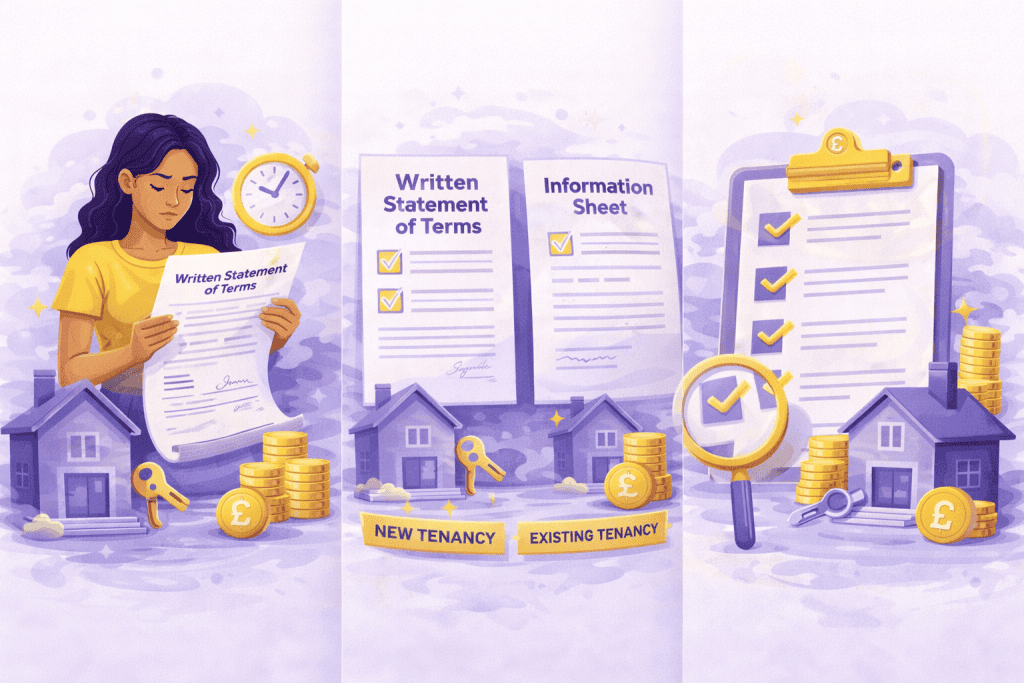
The law for your current tenancy depends on whether your current tenancy agreement is written down or was made verbally.
- Written Agreements: If you have a written contract (even if only part of it is in writing), your landlord does not have to give you a new “Written Statement.”
- What You Get Instead: Your landlord must give you a written document explaining how the Renters’ Rights Act 2025 changes your rights.
- The Deadline: You should receive this on or before 31 May 2026 and the precise wording is due to be published online in March 2026.
- The Document: This is called a Government Information Sheet.
If your existing tenancy was agreed verbally, the roadmap says your landlord will need to provide a written summary of the main terms on or before 31 May 2026. The Act supports this approach by setting a one month deadline from the commencement date for wholly oral existing tenancies.
What should I do if I do not receive the correct document after 1 May 2026?
Remember that between now and when the Renters Right Act is implemented (1 May 2026) – the current rules are still in place. However, if you enter a new tenancy after 1 May 2026 and you are not given the Written Statement before you commit, or if you are an existing tenant and you do not receive the Information Sheet or written summary when you should, keep your request in writing and keep copies.
You can then raise the issue with your local council’s private housing team. Local councils have enforcement roles under the new regime, including the ability to impose financial penalties in the situations set out in the law.
FAQ: Tenant Hive Answers
Tenant Hive Answers Common Questions From Tenants about the Renters Right Act.
Legal and financial disclaimer: This article is general information for private tenants in England, it is not legal advice. The Renters’ Rights Act 2025 is implemented through commencement provisions and secondary legislation. If you need advice on your specific situation, speak to a Housing Solicitor or Shelter.