Awaab’s Law for private renters: Mandatory repair timelines and how to trigger them
| Tenant Hive Super Speedy Summary |
|---|
| This issue affects all private tenants in England living with serious health and safety hazards. The Renters Rights Act 2025 expands Awaab’s Law to the private sector, requiring landlords to investigate and fix hazards like mould within strict, legally set timeframes. For now, this is in a transitional phase, and specific timeframes will be set following government consultation. |
For many years, the time it took for a landlord to fix a serious problem was often described vaguely as a “reasonable time.” This left many renters in England trapped in dangerous conditions for weeks or months. The Renters Rights Act 2025 ends this uncertainty by extending Awaab’s Law to the private rented sector, a move designed to ensure that no tenant has to live in a home that endangers their health.
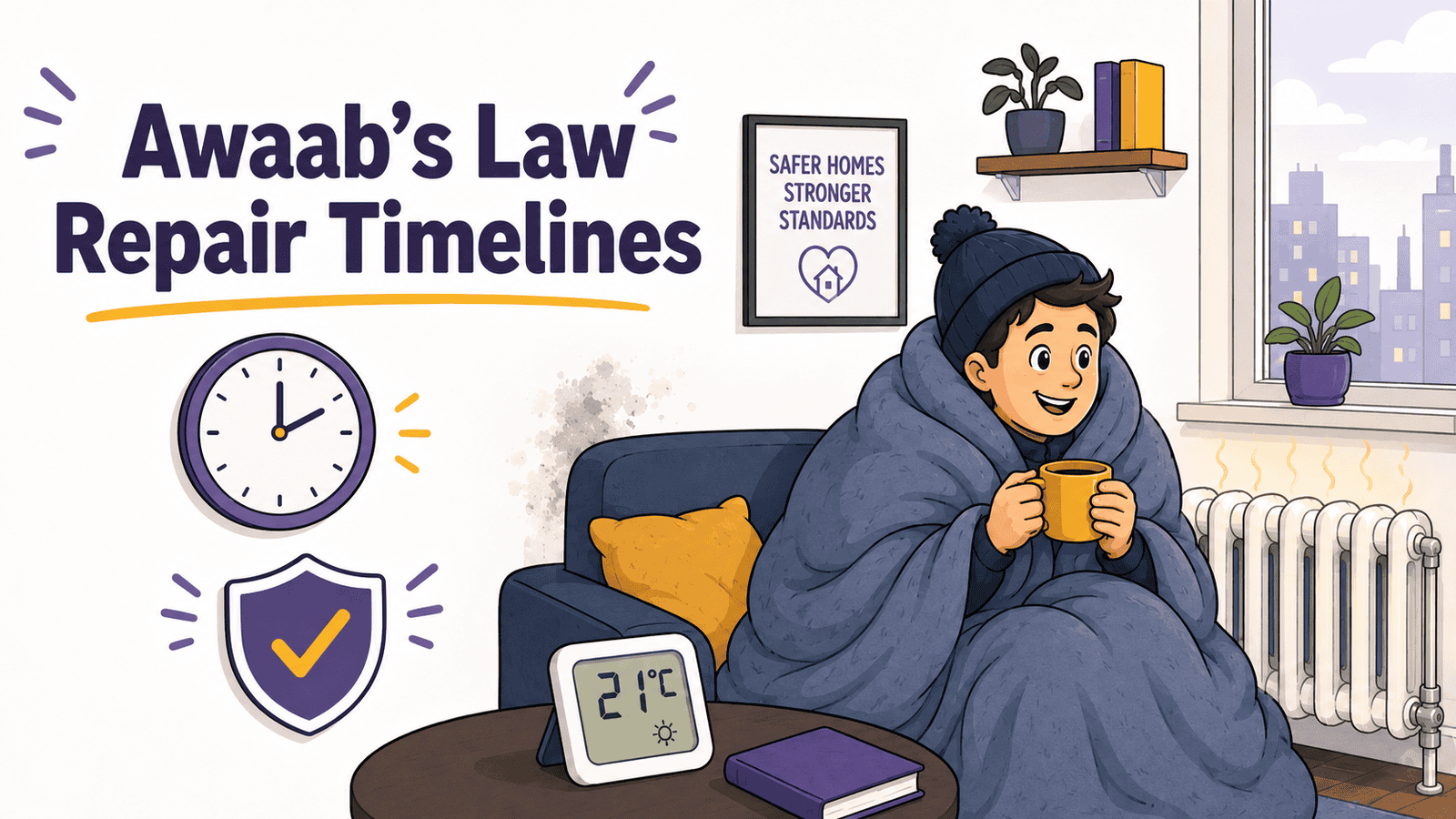
The law was originally created for social housing following the tragic death of Awaab Ishak, but the government’s Renters Rights Act Roadmap confirms that these protections are now being brought to the private rented sector to drive up quality across the board. While the exact number of hours or days for repairs is currently being decided, the shift toward legally enforceable timeframes is a major victory for tenant rights.
Glossary
- Awaab’s Law: A legal requirement forcing landlords to act on hazards within specific time limits.
- Serious Hazard: A defect in the home, such as severe mould or gas leaks, that poses a significant risk to health.
- Investigation Period: The maximum time a landlord has to inspect a reported hazard.
- Remedy Period: The maximum time a landlord has to start or complete the necessary repair work.
- HHSRS: The Housing Health and Safety Rating System used to classify the severity of hazards.
- Consultation: The process where the government asks for input before setting the final repair timelines.
What the Renters Rights Act 2025 says
The Act fundamentally changes the Landlord and Tenant Act 1985 by inserting new requirements for hazards to be remedied. It gives the Secretary of State the power to make regulations that specify exactly how long a landlord has to respond once a hazard is reported.
Specifically, the Act states that landlords must take action in relation to “prescribed hazards” within the periods specified in these new regulations. If a landlord fails to meet these deadlines, it will be treated as a breach of the tenancy agreement, allowing you to take legal action or escalate the issue to the Private Rented Sector Ombudsman.
What the Roadmap means for timing
The expansion of Awaab’s Law is being implemented in the third phase of the government’s plan.
- Consultation (Ongoing/TBC): The government must first consult on the specific details, such as which hazards are covered and exactly how many hours or days the mandatory timelines will be.
- Implementation (Phase 3 – Timing TBC): According to the Renters Rights Act Roadmap, the implementation of Awaab’s Law for the private sector is a Phase 3 milestone. The exact date is not yet confirmed and will be set following consultation
- Post commencement: Once the date is set, the rules will apply to all private tenancies in England.
What this means for you as a tenant, practical steps
Even while the specific timelines are being finalised, you should prepare to use these new rights.
1. Report hazards immediately in writing
Awaab’s Law timelines will likely trigger from the moment you notify your landlord. Always report issues via email or letter so you have a timestamped written record of when the clock started.
2. Identify Serious Hazards
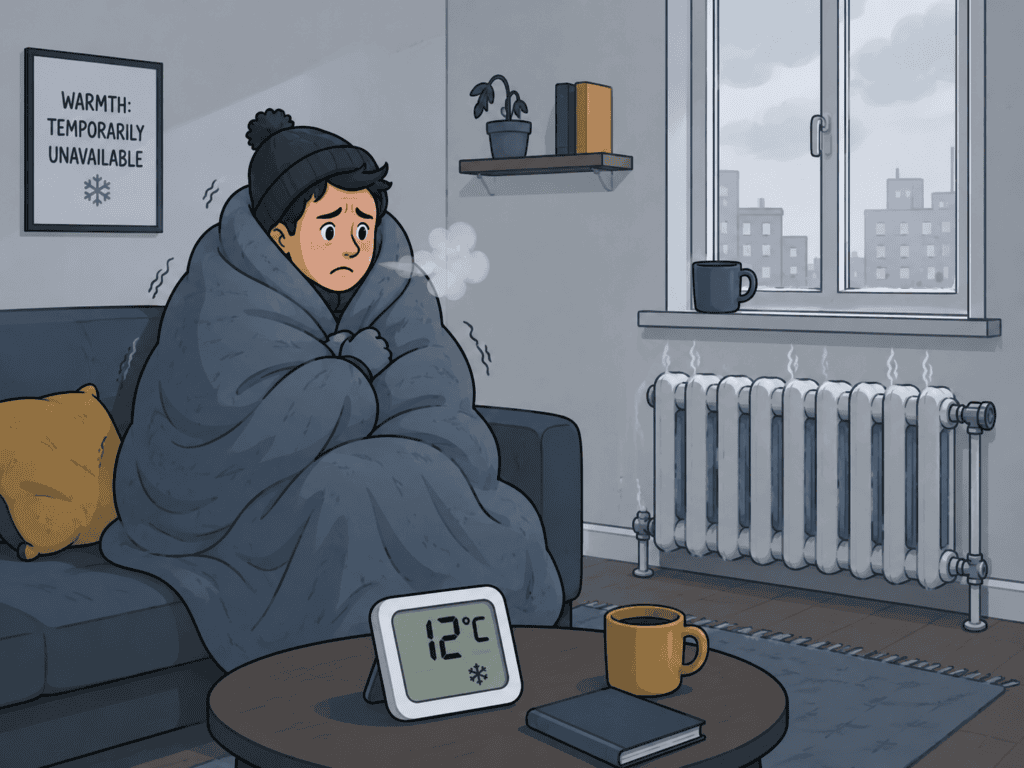
Familiarise yourself with what counts as a serious hazard under the HHSRS. Common examples include heavy damp and mould growth, faulty wiring, or a complete lack of heating during winter.
3. Track the response times
Keep a log of when the landlord investigated the issue and when they started work. Once the Post commencement timelines are active, this log will be your primary evidence if you need to claim compensation.
4. Involve the local council
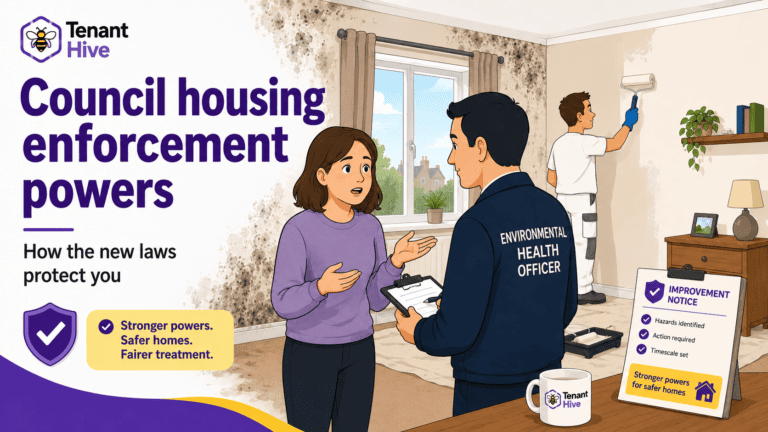
If your landlord misses a mandatory deadline, your local housing authority (council) will have expanded powers to issue an improvement notice or take emergency remedial action.
Common problems, and how to deal with them
The landlord claims they can’t find a contractor Under Awaab’s Law, lack of contractors is generally not an excuse for missing a mandatory safety deadline. The law is designed to ensure landlords have emergency plans in place.
The hazard is making me ill right now Do not wait for Phase 3. If you are in immediate danger, contact your local council’s Environmental Health team. They already have the power to inspect properties and can use post commencement investigatory powers (active from 27 December 2025) to demand action from your landlord.
Evidence to keep, and who to contact
To trigger your rights under Awaab’s Law effectively, keep:
- Timestamped photos: Show the hazard as it develops.
- Communication trail: Every email, text, or letter sent to the landlord or agent.
- Medical notes: If a hazard like mould is affecting your health, a letter from your GP is powerful evidence for the council or Ombudsman.
- Contact: Your local council remains the primary enforcer of property standards. Once the Private Rented Sector Ombudsman is active (expected late 2026), they will also handle disputes regarding repair timelines.
FAQ
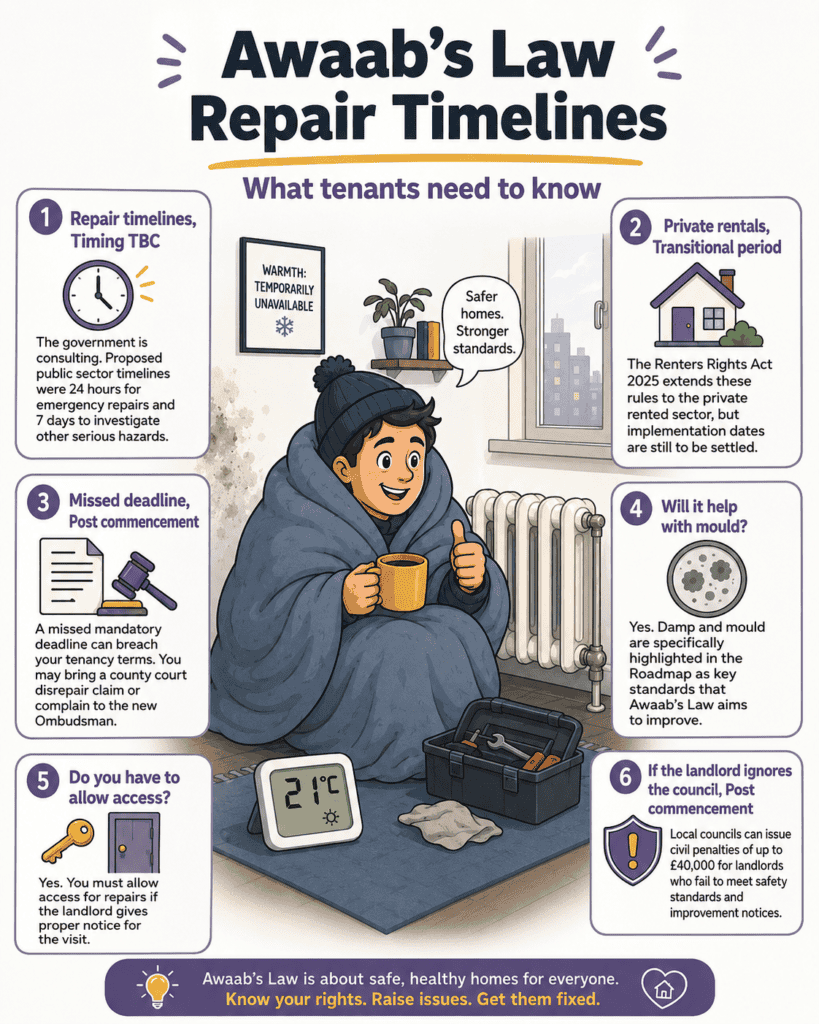
What are the repair timelines under Awaab’s Law? Timing TBC. The government is currently consulting on these. In the public sector, the proposed timelines were 24 hours for emergency repairs and 7 days to investigate other serious hazards.
Does Awaab’s Law apply to all private rentals? Transitional period: The Renters Rights Act 2025 extends these rules to the “private rented sector” generally, though the Roadmap notes the implementation dates are still to be settled.
Can I sue my landlord if they miss the Awaab’s Law deadline? Post commencement: Yes. A breach of these mandatory timelines is a breach of your tenancy terms, which can lead to a disrepair claim in the county court or a complaint to the new Ombudsman.
Will Awaab’s Law help with mould? Yes. Damp and mould are specifically highlighted in the Roadmap as key standards that the Act intends to raise through Awaab’s Law.
Do I have to let the landlord in to fix the hazard? Yes. You must provide access for repairs to be carried out within the legal timeframes, provided the landlord gives you proper notice for the visit.
What happens if the landlord ignores the council? Post commencement: Local councils can issue heavy civil penalties of up to £40,000 for landlords who fail to comply with safety standards and improvement notices.
Disclaimer: This article provides general information for England only and is not legal advice. Tenants should seek advice on their specific situation from a qualified professional or local advice service.