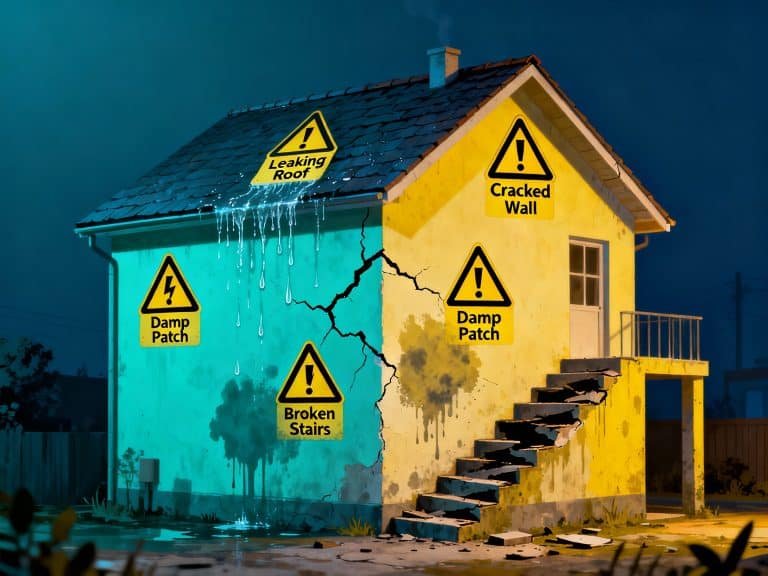

What if my landlord ignores disrepair, can I stop paying rent and what about eviction?
This article explains what to do if your landlord ignores disrepair, how to escalate complaints, when to involve the council or courts, why stopping rent is risky, and how disrepair issues can be related to a ‘revenge eviction’, Section 21 notices and illegal eviction. It also explains how the Renters’ Rights Act 2025 changes Section 21 from 1 May 2026.
When your landlord ignores disrepair, rent decisions and eviction risks
If your landlord is slow, makes excuses or ignores your correspondence about disrepair, you do not have to simply put up with it. You can escalate step by step and, in some cases, claim compensation. At the same time, you need to be very careful about rent arrears and eviction risk, especially while Section 21 still exists in practice up to 30 April 2026.
This means that until the Renters’ Right Act is in place (which is set to be implemented on 1 May 2026), a landlord may technically be able to evict you under a Section 21 Notice if you make a complaint of disrepair. This does not mean you should not report disrepair, but you should be aware of the potential consequences.
What can I do if my landlord will not fix disrepair
When polite reminders do not work, there are several other routes you can take. The right one depends on how serious the problem is and who your landlord is.
A typical escalation plan can look like this:
- Send a firmer written reminder:
- Refer to your earlier messages and attach them if needed
- Set a clear deadline you consider reasonable
- Explain how the issue affects your health or daily life
- Say that if nothing is done, you may contact the council or seek independent advice
- Use the formal complaints process
- Many landlords and all letting agents must belong to a redress scheme
- Follow their complaints procedure step by step
- Keep copies of every letter and email you send and receive
- Ask the council to inspect
- Contact your local council or environmental health team
- Explain the problem and send your evidence
- For serious hazards they can inspect and may issue legal notices that force your landlord to carry out repairs.
From late 2025, the Renters’ Rights Act 2025 gives councils stronger investigatory and enforcement powers, including the ability to demand information from landlords and agents and to enter business premises to seize documents where they suspect breaches of housing law. This should make it easier to tackle illegal eviction, serious hazards and persistent non compliance.
- Use the Housing Ombudsman for social landlords
- If you are a council or housing association tenant, you can usually go to the Housing Ombudsman once you have completed your landlord’s complaints process
- The Ombudsman can investigate and recommend remedies for poor handling of repairs and bad conditions
- Consider a disrepair claim and compensation
- In some cases you can ask a court to order repairs and award compensation
- Compensation can cover distress, inconvenience, loss of use of rooms and sometimes damaged belongings
Because court action carries costs and risks, you should normally get advice from a housing solicitor who handles disrepair cases before starting a claim.

Can I stop paying rent because of disrepair
This is one of the biggest traps for tenants. You do not have an automatic legal right to stop paying rent just because repairs are outstanding and it is a very risky decision to take. Withholding rent can quickly create arrears and give your landlord a strong reason to evict you.
Key points to remember are:
- Your rent is usually still legally due even when repairs are not done
- If you fall into arrears, your landlord may be able to seek possession based on those arrears and issue a court claim demanding those rent arrears back
- There is a strict and technical process if you want to use rent money to pay for repairs yourself, sometimes called doing the work and deducting the cost
- If you try this without following the process exactly, you may still be treated as owing the full rent
Safer options can include:
- Asking for a temporary rent reduction or refund during serious disrepair
- Agreeing compensation once repairs are completed
- Bringing a formal disrepair claim that includes a claim for compensation
If you are thinking about stopping rent or using rent to fund repairs, get tailored legal advice before you act. That advice can protect both your home and your case.
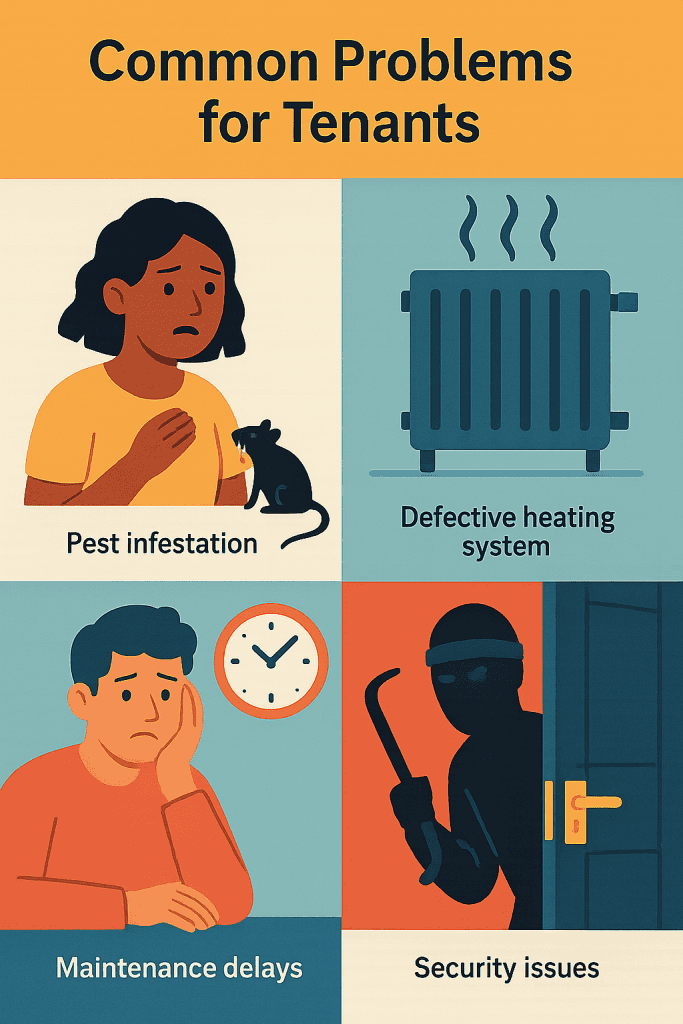
What is revenge eviction and how does it link to disrepair
Revenge eviction happens when a landlord tries to end your tenancy because you complained about repairs or poor conditions. In the current system some private landlords still use Section 21 notices, which allow eviction without giving a reason, and these can be used in a retaliatory way.
As at November 2025:
- The Renters’ Rights Act 2025 has become law, but Section 21 can still be used up to 30 April 2026, as long as the notice and any court claim follow the transition rules.
- If your council serves certain improvement or emergency notices after you complain, this can still block a valid Section 21 for a time, which is one of the main existing protections against revenge eviction.
From 1 May 2026:
- Your landlord will no longer be able to give you a new Section 21 notice. No fault evictions are abolished and all private tenancies move onto the new system created by the Renters’ Rights Act.
- To evict you, your landlord will need a legal ground, for example selling the property, moving in, serious rent arrears or antisocial behaviour, and must follow the new procedures.
- Valid Section 21 notices served before 1 May 2026 can still be used for a limited period, if the landlord issues a court claim in time, so some cases will continue through the courts for a while after that date.
The overall aim of the new law is to make it much harder for landlords to use eviction as retaliation for reasonable repair requests, and to give you more security when you stand up for your rights.
What is illegal eviction and what should I do if I am at risk
Illegal eviction and harassment are unlawful. Whatever the disrepair situation, your landlord must still follow the proper legal process to evict you and cannot simply force you out.
Your landlord must not:
- Change the locks while you are out
- Physically remove you from the property
- Threaten or harass you so that you feel you have to leave
For most private tenants, only court bailiffs with a possession warrant can lawfully carry out an eviction. This remains true under the Renters’ Rights Act, even once Section 21 notices are abolished.
If you are at risk right now:
- If you feel in danger call the Police
- Contact the council, who now have stronger powers to investigate and enforce against illegal eviction and poor conditions
- Seek urgent advice from a housing solicitor
Disclaimer: Content is for information purposes only and does not constitute legal advice. Always consult a professional for your specific circumstances.