
Guide on when the Section 21 Notice will be abolished
When Will Section 21 Be Abolished?: The Tenant’s Survival Guide
Tenant Hive Super Speedy Summary:
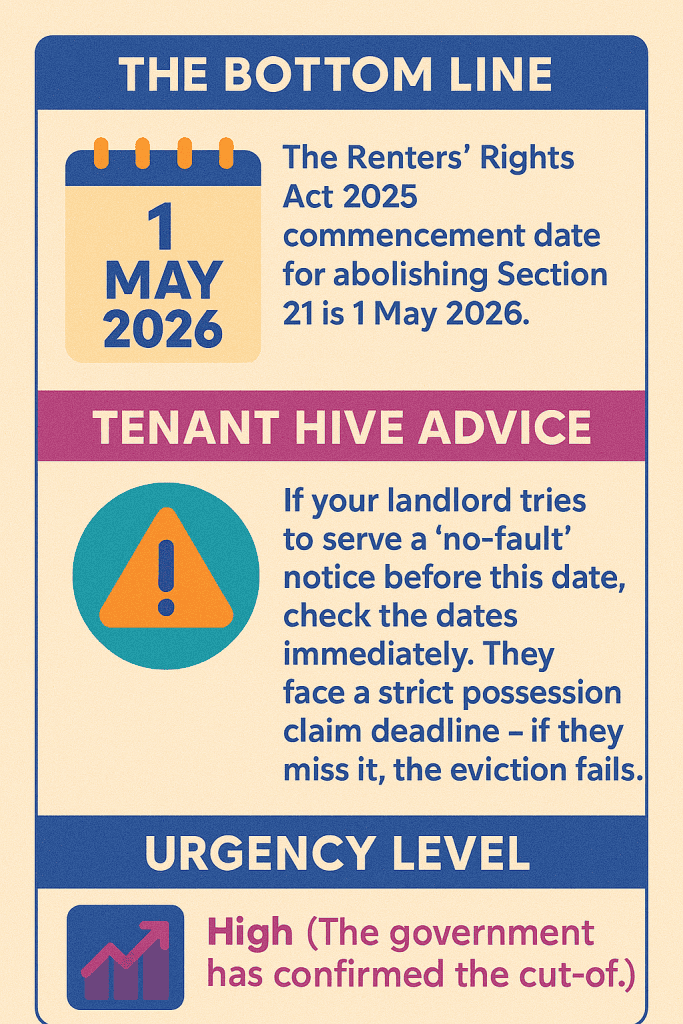
- The Bottom Line: The Renters’ Rights Act 2025 commencement date for abolishing Section 21 is 1 May 2026.
- Tenant Hive Advice: If your landlord tries to serve a “no-fault” notice before this date, check the dates immediately. They face a strict possession claim deadline – if they miss it, the eviction fails.
- Urgency Level: High (The government has confirmed the cut-off).
When Will Section 21 Be Abolished?
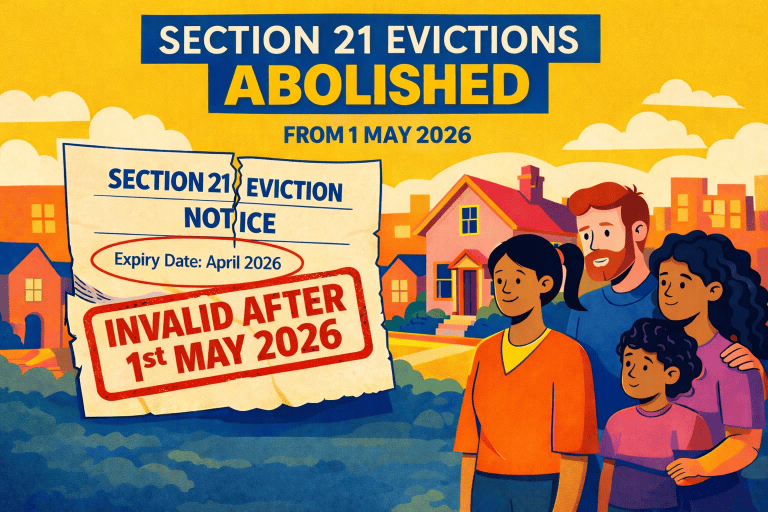
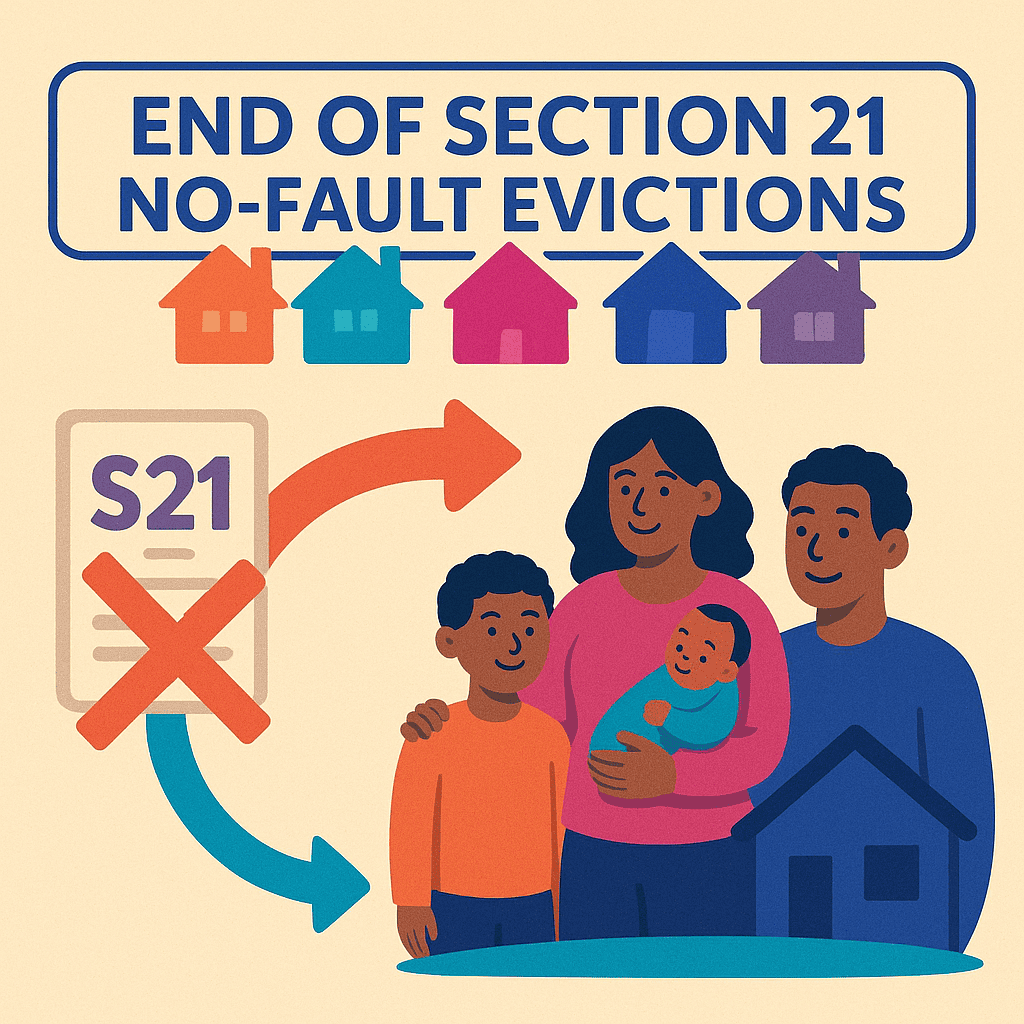
According to the official government roadmap, the Renters’ Rights Act 2025 commencement date is 1 May 2026.
This is the day the balance of power shifts. Following Royal Assent on 27 October 2025, the law confirms a “Big Bang” implementation. On 1 May 2026, the ban on “no-fault eviction” applies to everyone both new tenancies and existing ones. There is no grace period for landlords to keep using old rules for current tenants.
Tenant Hive Definition: No-Fault Eviction
Tenant Hive defines a “no-fault eviction” as the process under Section 21 of the Housing Act 1988 where a landlord kicks you out without proving you did anything wrong. In Tenant Hive’s view this is deeply unfair.
The Critical Dates: When Will You Be Safe From a No Fault Eviction?
Tenant Hive analysis of the schedule of commencement dates for all Act provisions reveals the timeline for the England private rented sector (PRS):
| Date | Status | What It Means For You |
| Now – 30 Apr 2026 | Danger Zone | Section 21 Housing Act 1988 is still law. Your landlord can still serve a valid notice. |
| 1 May 2026 | Abolition Day | Section 21 is abolished. Your Assured shorthold tenancy (AST) automatically converts to a secure Assured periodic tenancy. |
The “Bridge” Period: Handling Notices Served Before May 2026
If you receive a Section 21 notice served before 1 May 2026, do not panic. Your landlord is racing against the clock. According to the transitional period for Section 21 notices rules, they are strictly limited.
Tenant Hive’s Section 21 Validity Check: Did They Miss the Deadline?
Even if they serve the notice in time (on or before 30 April 2026), they can still lose the right to evict you.
- The trap for landlords: They have a strict possession claim deadline for Section 21 notices.
- The Rule: They must apply to the County Court by 1 August 2026 (or within the notice’s 6-month validity, whichever is sooner).
- Your Defence: If you are still in the property on 2 August 2026 and they haven’t applied to court, the notice expires. They cannot use it. They cannot serve a new one (because Section 21 is abolished). You are safe, but obviously take specific legal advice if you are in this situation.
Your Contract: Don’t Let Them “Fixed-Term” You
Landlords are currently trying to panic tenants into signing long contracts. Tenant Hive advises you to check the impact on existing tenancy agreements and clauses.
The “Fixed Term” Myth
Your landlord might say: “You signed a 12-month contract in January 2026, so you can’t leave until 2027.” This is likely false. From 1 May 2026, the new Assured periodic tenancy becomes the law. This new law, also known as the Renters’ Right Act, is very good for Tenants and gives you several key rights:
- Your Right to Leave: The new law overrides old contracts. Under the new law which begins on 1 May 2026, you will very likely have the legal right to give 2 months’ notice to quit at any time, even if your old contract says otherwise.
- Landlord Right to Evict: The clause in your contract allowing landlords to use Section 21 becomes legally worthless on 1 May 2026, even if you have signed a tenancy agreement stating otherwise.
The Tenant Hive’s Watchdog Checklist: Is Your Landlord Compliant?
According to government guidance on Section 21 abolition, landlords are struggling to get their paperwork right, so cross-reference their actions against this landlord preparation and compliance checklist. If they miss a step, their eviction attempt is invalid.
1. The “Information Sheet” Test
By 31 May 2026, your landlord must give you a specific government “Information Sheet” explaining your new rights.
- Tenant Hive Advice: If they don’t give you this, make a record of this. You have no obligation to inform your landlord either. However, it is evidence of their non-compliance which you can use if they try to evict you later.
2. The Section 8 Defence
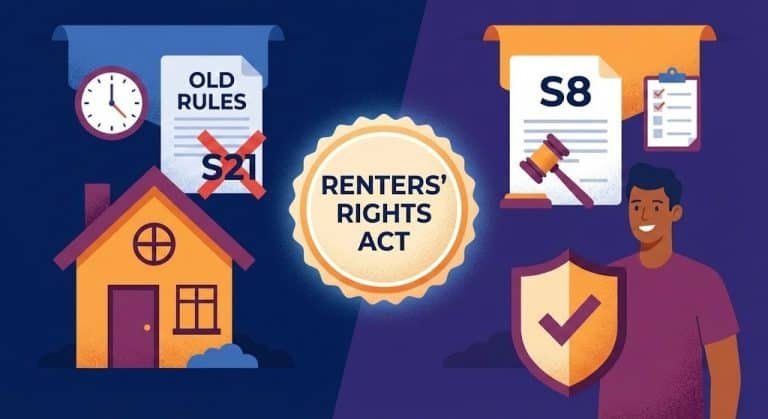
After May 2026, they can only evict you using Section 8 of the Housing Act 1988. They must prove a legal ground (like rent arrears or selling the property).
- The Check: They cannot just “ask” you to leave. They must serve a specific legal notice proving the ground. If they say they are selling, you can ask for proof.
3. Protection from Retaliation
If you complain about disrepair (damp, mould) and they try to evict you using the new Section 8 grounds, this could be Retaliatory Eviction. The new Act strengthens your protection here. Never be afraid to report bad conditions.
Tenant’s FAQ: Your Questions Answered
Q: Can my landlord increase the rent to force me out instead?
A: They might try, but the new Act restricts their ability to do this. From 1 May 2026, landlords can only increase rent once a year using a Section 13 Notice, and you have the right to challenge excessive increases at a First-tier Tribunal. If the tribunal decides the increase is above market rate, it can block it.
Q: What if I have rent arrears? Can they still evict me?
A: Yes. Even after Section 21 is gone, landlords can use Section 8 (Ground 8) for serious rent arrears. If you owe 3 months’ rent (revised up from 2 months under the new Act), the court must grant possession.
Tenant Hive Advice: Prioritise paying rent and if you are struggling with debt seek advice from your local council.
Q: My landlord says they are selling the property. Do I have to leave immediately?
A: No. Under the new Section 8 rules, a landlord can evict to sell, but they cannot do this in the first 12 months of your tenancy. They must also give you 4 months’ notice (increased from the old 2 months). You can demand to see proof of their intent to sell (e.g. estate agent contract).
Q: I signed a “surrender” agreement. Does the ban still apply?
A: Be careful. If you voluntarily sign a document agreeing to leave, you are “surrendering” the tenancy. This bypasses the eviction ban because you are leaving by choice.
Tenant Hive Advice: Never sign a surrender document unless you are 100% ready to move, have a new home secured and have taken legal advice.
The Tenant Hive Jargon Buster
Housing law is full of confusing terms and although the Renters’ Right Act 2025 is an excellent piece of legislation which goes a long way to redressing the unfair private rental sector, there are still many terms which are hard to understand for a non-legal person. Here are some terms used in this guide and what they actually mean.
- Assured Shorthold Tenancy (AST): The old type of tenancy (pre-May 2026). It gave landlords the power to use Section 21.
- Assured Periodic Tenancy: The new ‘forever’ tenancy (post-May 2026). It has no end date and no fixed term.
- Section 21 Notice: The “no-fault” eviction Notice. Valid only until 30 April 2026. Often called “Form 6A”.
- Section 8 Notice: The ‘fault-based’ eviction letter. The landlord must prove a specific legal reason (Ground) in court to use this.
- Possession Order: A court document ordering you to leave.
- Warrant of Possession: The final stage where bailiffs are authorised to physically evict you.
- Retaliatory Eviction: When a landlord tries to evict you specifically because you complained about repairs or bad conditions. This is unlawful.
Related Tenant Hive Guides
- The Section 21 Validity Checker: 10 Mistakes Landlords Make
- Renters’ Rights Act 2025: Your New Powers
Disclaimer: Tenant Hive provides information for information purposes only and does not constitute legal advice. Housing laws can be complex and subject to change. For specific legal concerns, please consult a qualified solicitor or Citizens Advice.