New EPC rules for Tenants confirmed by the Government for
Tenant Hive Super Speedy Summary
If you rent privately in England, the government has confirmed that homes should meet a higher minimum energy standard by 1 October 2030, unless the landlord has a valid exemption.
The big practical change is not just the 2030 date, it is that EPCs are being redesigned, with a new Home Energy Model and new headline metrics intended to start appearing from late 2026, then becoming the basis for how landlords prove compliance after the transition point in 2029.
If your home already has an Energy Efficiency Rating of C or above on the current EPC scale before 1 October 2029, the government says it will be treated as compliant with the future standard until that EPC expires, or is replaced.
In Tenant Hive’s opinion this is a welcome step in the right direction but does little to help current tenants.
What does this mean for me as a tenant?
Energy efficiency rules matter because they are one of the few levers that can push landlords to improve insulation, reduce draughts and upgrade heating performance, which can mean a warmer home and lower bills.
But you need to separate what is law today from what is planned for later, because you can only enforce the current rules right now.
So what is the legal minimum EPC rating now?
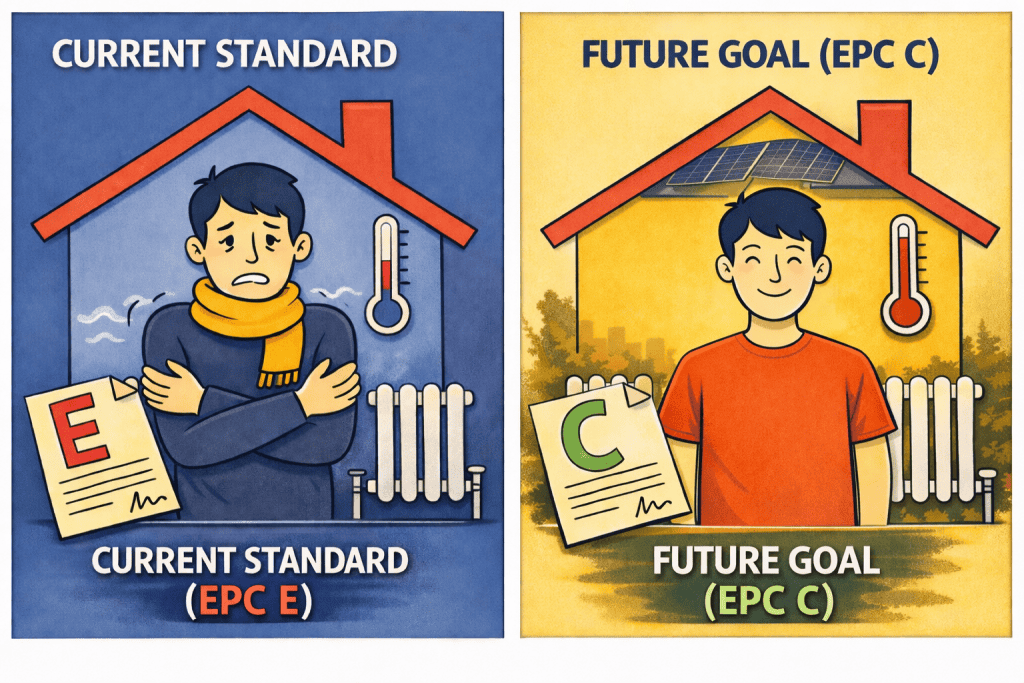
At the moment, the legal minimum energy efficiency standard for most domestic private rented homes in England is an EPC band E. Letting a home that is F or G is generally prohibited unless the landlord has registered a valid exemption.
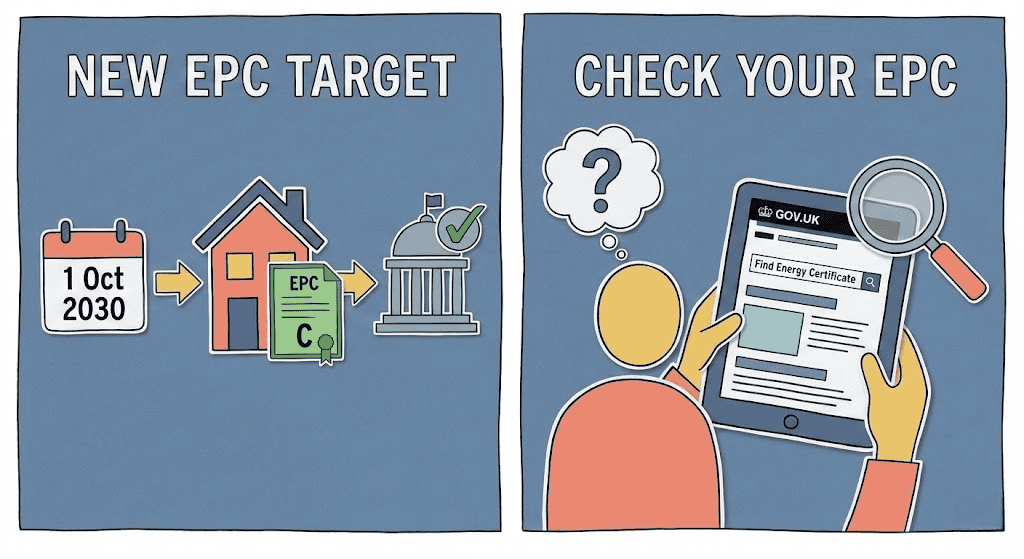
If you suspect your home is below E then your starting point is evidence. Ask for the EPC, and check it yourself on the official EPC register.
Here is the link for the official register where you can check yourself: https://www.gov.uk/find-energy-certificate
What is changing based on the government’s January 2026 statement?
In late January the government confirmed that all privately rented properties must reach a minimum EPC rating of C by 1 October 2030 for all tenancies in England unless exempt.
So, for tenants, the message is simple. EPC E remains the enforceable minimum today, the uplift to a higher standard is a proposed regulatory change planned to take effect later, but sadly not an automatic right you can enforce immediately.
Where does the Renters’ Right Act 2025 fit in?
The Ministry of Housing, Communities and Local Government roadmap says that from late 2026 a new Database of PRS properties will be introduced to bring together key information for landlords, tenants, and councils, to inform tenant choices and support enforcement targeting. You can read more about this here.
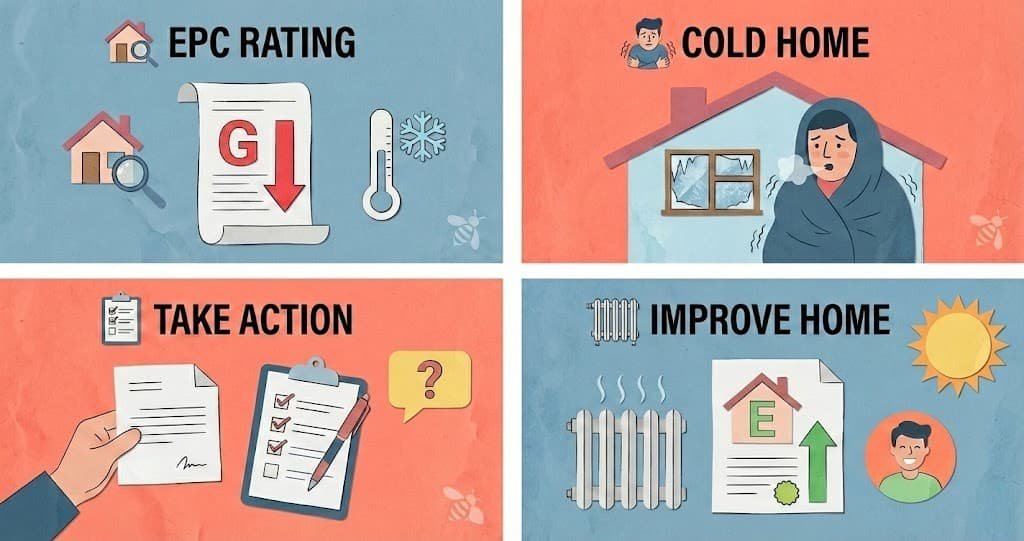
What can I do if my home is cold or expensive to heat?
Start with the EPC, then treat it as evidence alongside your lived experience. If the home is F or G, or you have reason to believe it is below E, ask the landlord what exemption they rely on and whether it is registered, then speak to your local council private sector housing team if you are not satisfied. The government landlord guidance sets out the minimum standard and the role of exemptions.
FAQ: Tenant Hive Answers
Tenant Hive Answers Common Tenant Questions
Legal and financial disclaimer
This article is general information for private renters in England and Wales and is not legal advice. The uplift to an EPC C equivalent standard is a stated government policy position that requires regulations to be made and commenced, and the detail can change. If you have a live dispute about energy efficiency, disrepair, damp and mould, harassment, eviction, or enforcement, get advice from a regulated housing solicitor or a qualified housing adviser before you act.