How Will the Renters’ Rights Act New Property Portal and Ombudsman Help Me? (England)
Updated: October 2025
In a nutshell
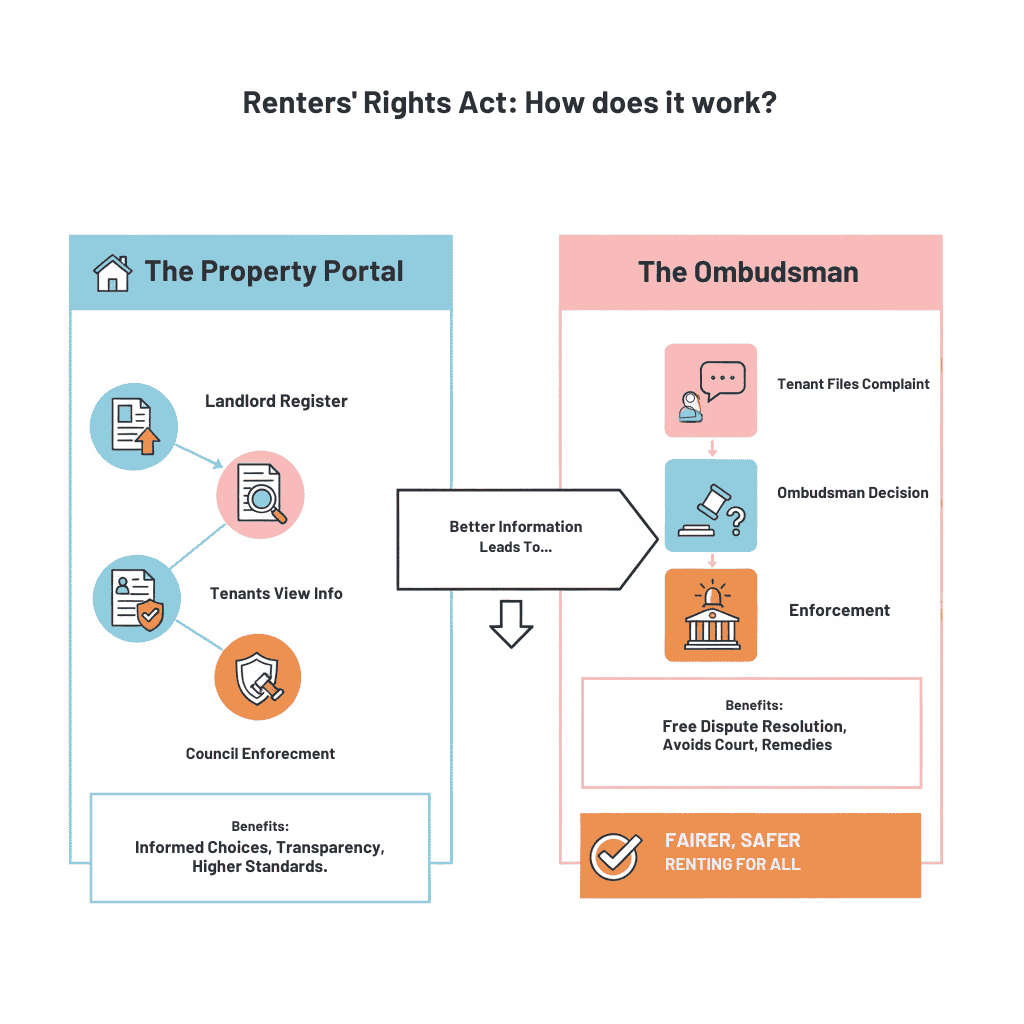
- A national Property Portal (Private Rented Sector Database) will require every landlord to register themselves and each property.
- A new Private Rented Sector Ombudsman will give free, binding decisions on complaints about a landlord’s actions or behaviour.
- You will likely be able to view key information about a property and a landlord’s compliance history before you rent, although exactly what information will be made available isn’t clear at present.
- Councils will use the data to target rogue or criminal landlords.
What is the renters’ Rights Property Portal?
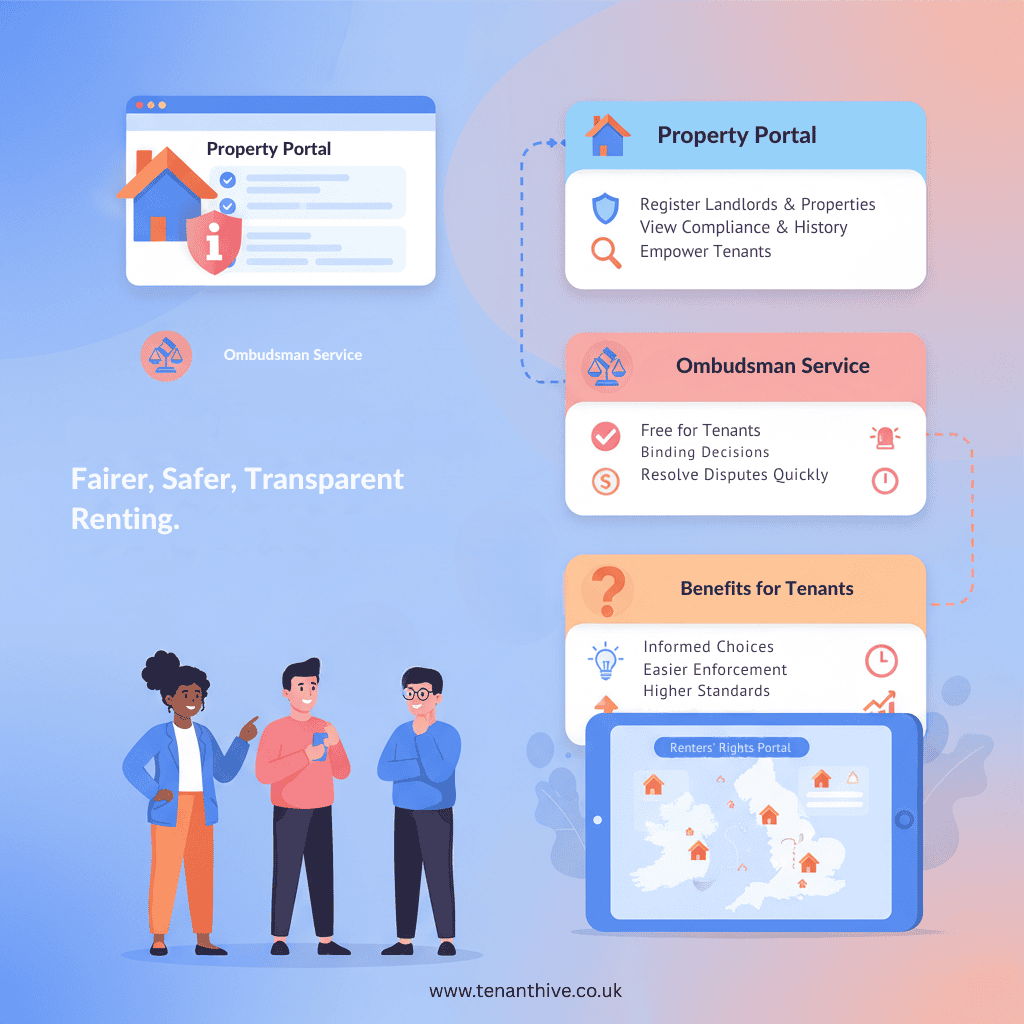
The Property Portal is a public-facing service powered by a national database. Landlords must register and keep their entries up to date. It puts trusted information in one place so tenants, councils, and responsible landlords are working from the same facts.
What can I check on the new Renters’ Rights Property Portal?
Based on current guidance, the property portal should identify the landlord for a given property and show whether they’re properly registered – although its important to remember the exact details have not been confirmed yet.
It’s also expected to display basic compliance information for the property (for example, any required licences or safety documentation), but the exact data fields have not yet been finalised.
Finally, while not confirmed, the portal may include indicators of enforcement history, such as financial penalties, banning orders, or other regulatory action taken against a landlord.
How does the new Renters’ Rights Property Portal help me?
With clearer, verified information up front, you can make informed choices before you sign a tenancy agreement. The property portal will hopefully allow you to compare properties on compliance, landlord registration, and key standards rather than rely on promises or guesswork.
If something goes wrong, it becomes easier to enforce your rights. You’ll know what’s required by law, what evidence to collect, and when it’s appropriate to escalate a complaint to your local council or the Ombudsman.
By making non-compliance visible, the portal raises safety and standards across the sector. Landlords and agents have a stronger incentive to meet their legal duties, and renters gain a transparent record to hold them to account.
What must Landlords do on the Renters’ Rights Property Portal
Under the new portal, landlords have three core duties. First, they must register themselves and every rental property before it’s advertised or let. Second, they must keep records current by uploading all required documents within the specified timeframes. Third, they must keep each entry up to date so every listing remains active and compliant.
What landlords must do on the Renters’ Rights Property Portal
Under the new portal, landlords have three core duties. First, they must register themselves and every rental property before it’s advertised or let. Second, they must keep records current by uploading all required documents within the specified timeframes. Third, they must keep each entry up to date so every listing remains active and compliant.
What are the Penalties for Landlords for non-compliance?
Landlords who fail to register, or who advertise or let a property without proper registration, may face civil penalties under the new Renters’ Rights Act rules. Providing false or misleading information can lead to even higher fines, particularly where breaches are repeated or ongoing.
Local councils will also have access to the portal’s data, allowing them to investigate and take enforcement action against landlords who fail to meet their legal obligations.
What is the Private Rented Sector Ombudsman?
All private landlords in England with assured or regulated tenancies must join the Ombudsman scheme, including those who use letting agents. The Ombudsman is independent, free for tenants, and designed to resolve disputes quickly without going to court.
What can you get from the Ombudsman?
- An explanation or apology where appropriate
- Information or documents you should have received
- Remedial action to put things right
- Compensation where you’ve suffered harm or inconvenience
When can you complain to the Ombudsman?
You can complain at any stage: before you move in, during your tenancy, or at the end. The Ombudsman looks at the landlord’s actions, inactions, or behaviour and the impact on you.
What happens if a landlord ignores an Ombudsman decision
If a landlord fails to comply with an Ombudsman’s decision, the local council can step in and take enforcement action. Civil penalties may also be imposed, with higher fines applied for repeated or ongoing breaches.
FAQs
Do I have to pay to use the Ombudsman?
No. It’s free for tenants. Landlords are expected to fund the service via membership fees.
Can my landlord use the Ombudsman against me?
No. The Ombudsman protects you as the consumer. It isn’t a route for landlords to seek binding decisions against tenants.
When will the Portal and Ombudsman go live?
The law is in place but some parts start later. The government will announce commencement dates and a phased roll-out.
What if my landlord isn’t on the Portal?
Landlords and properties should be registered before advertising or letting. Report unregistered listings to your local council. Treat lack of registration as a red flag.
What does the new Renters’ Rights Property Portal and Ombudsman mean for tenants?
Renting becomes more transparent and hopefully more fair. You get better information upfront, a free way to resolve problems, and stronger council enforcement against the worst landlords. If something goes wrong, you have a clear path to get it put right without having to go to court.
Official sources
- Guide to the Renters’ Rights Bill/Act: https://www.gov.uk/government/publications/guide-to-the-renters-rights-bill/guide-to-the-renters-rights-bill
- Renters’ Rights Bill/Act collection: https://www.gov.uk/government/collections/renters-rights-bill
Disclaimer
This guide is general information for England and not legal advice. Parts of the law will be phased in. Always check the latest government guidance or speak to a qualified adviser about your situation.